HE LEFT ME ON THE SIDE OF THE ROAD AFTER HIS FATHER’S FUNERAL
Chapter 1 – THE ROAD HE LEFT ME ON
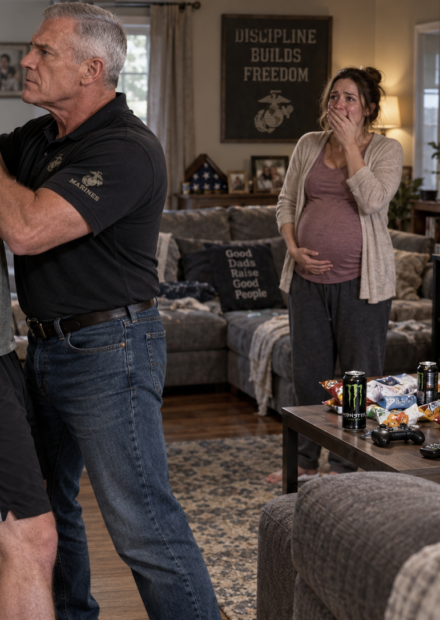
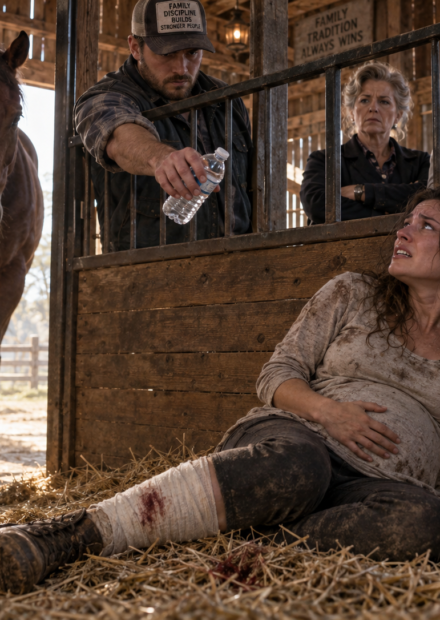
After we buried my husband, my son drove me to an empty road outside town and said, “This is where you get out.”
For a moment, I thought grief had made me misunderstand him.
The car was still running.
Dust moved in pale ribbons across the shoulder of the road. Beyond the ditch there was nothing except dry grass, scattered trees, and the long gray line of pavement disappearing toward the hills.
I turned toward my son.
“What did you say?”
He kept both hands on the steering wheel.
He did not look at me.
“The house and the business belong to me now.”
My husband had been buried less than forty minutes earlier.
I was still wearing the black dress I had chosen two nights before because I had been too exhausted to care whether it fit properly. A small funeral program was folded inside my handbag. I could still smell lilies on my coat from where I had leaned over the casket to say goodbye.
And my only child was telling me to get out of his car.
“Daniel.”
He finally looked at me.
There was no grief in his expression.
There was impatience.
The same impatience I had been watching grow in him for months.
“You heard me.”
I stared at him.
“You’re leaving me here?”
“You’ll figure something out.”
“Daniel, I don’t have my phone.”
“I know.”
“My wallet is in the house.”
He shrugged.
That small movement hurt more than if he had shouted.
“Then I guess you should have thought about that before making everything difficult.”
I felt something inside me go very still.
“What exactly have I made difficult?”
His jaw tightened.
“This.”
He gestured vaguely, as if my existence itself were an inconvenience.
“The estate. The company. Dad should have dealt with all of this years ago. Instead, now I’m going to have lawyers and paperwork and employees asking questions, and you’re going to be emotional about every little thing.”
“Your father was dying.”
“And I was trying to prepare.”
“You were asking him for passwords while he could barely sit up.”
“Because somebody had to think ahead.”
I looked at the man beside me and tried to find the little boy whose fever I had sat beside all night when he was seven.
The teenager whose first broken heart had seemed like the end of the world.
The young man his father had proudly brought into the company.
For one irrational second I thought perhaps I could say the right thing and bring that person back.
Then Daniel reached across me and pushed open the passenger door.
Cold air rushed into the car.
“I don’t want a scene,” he said.
A laugh almost escaped me.
A scene.
At his father’s funeral, Daniel had accepted condolences with one hand while checking messages with the other. He had spent the reception asking two senior employees whether they had copies of the warehouse alarm codes.
But he did not want a scene.
I looked down at my handbag.
Inside were a handkerchief, my glasses, the funeral program, a small bottle of water, and the house keys.
No phone.
No money.
Daniel had offered to drive that morning and had told me I would not need my wallet.
“You shouldn’t be worrying about anything today, Mom,” he had said.
At the time, I had believed it was kindness.
Now I understood.
He had wanted me dependent.
Perhaps he had even wanted this exact moment.
I stepped out.
My shoes sank slightly into the dirt.
Daniel leaned across the seat.
“Don’t come to the company.”
I bent down toward the open door.
“What?”
“I mean it. You’ll just confuse people.”
“Daniel—”
“You never wanted to deal with the business side anyway.”
For thirty-four years, I had kept the books when there was no money for an accountant.
I had answered customer calls from our kitchen table.
I had packed orders after midnight.
I had slept on the office floor beside my husband during our first inventory crisis because we could not afford to hire another employee.
But my son believed I had never dealt with the business.
Because for most of his life, he had only seen his father’s name on the front door.
He looked at me with an expression that almost resembled pity.
“I’ll have somebody send your clothes later.”
My throat tightened.
“My clothes.”
“You won’t need much.”
“Where exactly do you imagine I’m going?”
“That’s not my problem anymore.”
There it was.
Clean.
Final.
Cruel enough that it burned away something I had been carrying for years without realizing how heavy it was.
The endless excuses.
He’s stressed.
He’s ambitious.
He wants his father’s approval.
He doesn’t understand what he’s saying.
He’ll mature.
He loves us.
Somewhere in the middle of that empty road, every excuse finally died.
I straightened.
“All right.”
That seemed to surprise him.
He had expected pleading.
Perhaps he had expected me to cling to the door.
Instead, I closed it.
Daniel frowned through the window.
Then he drove away.
He did not look back.
I watched the car disappear until the sound of the engine faded.
Then there was only wind.
Dust.
And silence.
I stood there for several minutes.
My husband was dead.
My son had abandoned me.
I had no phone.
No money.
No ride.
And according to Daniel, I had no home and no business.
By any reasonable measure, I should have felt terrified.
Instead, beneath the grief and disbelief, another feeling slowly rose.
Relief.
It startled me so much that I almost felt ashamed of it.
I was not trapped.
For years, I had been afraid of what would happen if I stopped protecting Daniel from consequences.
Afraid of dividing the family.
Afraid of making my husband choose between peace and discipline.
Afraid of losing my son.
Now Daniel had answered the question for me.
He had chosen.
And for the first time in my life, I did not have to pretend I hadn’t seen what he was becoming.
I picked up my bag.
Then I started walking.
Three weeks earlier, while my husband was still lucid enough to understand every word being said around him, Daniel had already begun behaving as though the funeral had happened.
My husband’s name was Thomas.
We had been married thirty-eight years.
He had been ill long enough that our lives had gradually shrunk to medication schedules, quiet doctors’ conversations, clean sheets, and the sound of his breathing in the dark.
During his final month, a hospital bed stood beside the windows in our bedroom.
Thomas hated it.
He said it made our room feel like a train station where everyone was waiting for someone to leave.
So I covered the metal rails with one of our old quilts.
It did not change anything.
But he smiled when he saw it.
Daniel visited often during those weeks.
At first, I was grateful.
Then I began noticing what he talked about.
Not his father.
Not memories.
Not fear.
Business.
One afternoon, he walked into the bedroom carrying a notebook.
Thomas was awake but weak.
Daniel barely greeted him.
“Dad, where are the keys to the old records cabinet?”
Thomas looked at him.
“What cabinet?”
“The one in your office.”
“Why?”
“I need the original vendor agreements.”
“For what?”
Daniel sighed.
“I’m trying to make sure everything is organized.”
I was changing the water beside the bed.
I stopped.
“Organized for what?”
Daniel gave me the smile he had started using whenever he thought I was interfering.
Patient.
Condescending.
The smile of a man explaining something obvious to a child.
“You won’t want to deal with all this afterward, Mom.”
The word afterward hung in the room.
Thomas heard it.
So did I.
Daniel continued.
“I also need to know which account pays payroll. And Dad, I need the master login for the banking portal.”
Thomas stared at him.
“Why?”
“Because eventually I’m going to need it.”
“Eventually?”
Daniel shifted his weight.
“Dad.”
“I’m still here.”
“I know that.”
“Do you?”
I had rarely heard Thomas speak to him that way.
Daniel’s expression hardened.
“I’m trying to help.”
“No,” Thomas said quietly. “You’re trying to hurry.”
Silence filled the room.
Daniel looked at me as if I had somehow caused the moment.
Then he closed the notebook.
“Fine. Forget it.”
He left.
We heard him walking down the hall.
A door shut.
Thomas kept staring at the doorway.
Then he reached for my hand.
His fingers were thin.
Much thinner than the hands that had once carried lumber, machinery parts, boxes, tools, and eventually our sleeping son from the car.
“Eleanor.”
That was my name.
I sat beside him.
“I’m here.”
His voice was barely above a whisper.
“Call Leonard.”
I knew exactly who he meant.
Leonard Price had been our attorney for more than twenty years.
I hesitated.
“Now?”
“Now.”
“Thomas—”
“Ellie.”
He squeezed my fingers.
“He thinks I’m already gone.”
I wanted to deny it.
Instead, I looked toward the door Daniel had just walked through.
Thomas closed his eyes.
“I should have seen it sooner.”
Neither of us said anything for a while.
There are moments in a marriage when two people do not need words because the truth between them is too old and too familiar.
We had loved Daniel.
We still loved him.
That was part of the problem.
Love had made us generous long after generosity had stopped helping him.
When Daniel was young, confidence had been one of his best qualities.
He was fearless.
He could walk into a room full of strangers and know everyone’s name within an hour.
He sold more during his first year at the company than people twice his age.
Customers liked him.
Employees laughed with him.
Thomas was proud.
I was proud too.
But slowly, confidence had changed.
Daniel stopped asking and started assuming.
He assumed a company vehicle would always be available for him.
He assumed employees would change schedules because he wanted them to.
He assumed his father’s office would eventually become his office.
If Thomas corrected him, Daniel acted wounded.
If I corrected him, he acted insulted.
And because there was always another deadline, another family dinner, another holiday, another reason not to fight, we kept postponing the confrontation.
Until Thomas became ill.
Illness has a brutal way of removing the word later.
I called Leonard from the hallway.
Two days later, he came to the house.
Daniel had gone to the company that afternoon.
Thomas was exhausted, but his mind was clear.
Leonard sat near the bed and went through everything slowly.
More slowly than Thomas wanted.
That was Leonard.
He did not care how emotional a situation became.
He wanted every sentence understood.
Every signature deliberate.
The house was protected so it would remain mine.
Thomas’s controlling interest in the company would pass into a trust that I controlled.
Daniel would receive what his father had already decided to leave him.
It was not nothing.
Thomas had not disowned him.
He had not tried to punish him from the grave.
He simply made sure Daniel could not walk into the company after the funeral and declare himself king.
When Leonard finished, Thomas leaned back against the pillows.
“You understand?” he asked me.
“Yes.”
“You’re not to give it away because he shouts.”
I almost smiled.
“Thomas.”
“I know you.”
“You make that sound like a threat.”
“It is.”
His eyes softened.
Then he looked toward Leonard.
“And the office?”
Leonard nodded.
“The instructions can take effect immediately.”
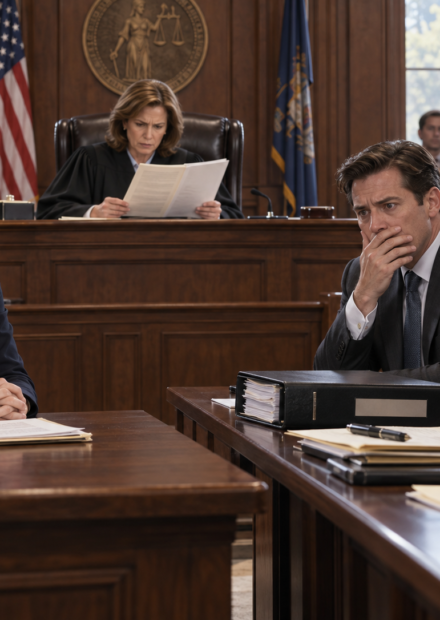
Thomas had already prepared a written directive regarding company access and authority during his illness and after his death until the estate and trust administration were formally settled.
Daniel remained an employee.
Nothing more.
He had no right to the company accounts.
No right to dismiss staff.
No right to occupy Thomas’s office.
No right to remove records.
And no right to represent himself as owner.
That was when I asked Mara to come by.
Mara had worked with us for twenty-six years.
She had started at the front desk when Daniel was still in elementary school.
Over time she became the person who seemed to know where everything was, who needed what, which supplier was late, which employee had a sick child, which customer needed calming, and which forms nobody else could find.
Daniel sometimes referred to her as “the office manager.”
Thomas called her “the reason the building hasn’t burned down.”
I handed Mara a sealed envelope.
“What is this?” she asked.
“Something I hope you never need.”
She looked from me to Thomas.
Thomas managed a weak smile.
“If Daniel comes in here before speaking to Leonard and tries to take control, don’t argue with him.”
Mara’s mouth tightened.
“What do I do?”
“Give him this,” I said.
“And then?”
“Follow the instructions inside.”
Daniel never knew that meeting happened.
Which was why, three weeks later, as I walked along that empty road in funeral clothes, I was not thinking about what he had taken.
I was thinking about where he would go next.
The company.
Of course.
My feet hurt before I reached the first bend.
By the time I saw the gas station sign, my heels were blistered.
The place was small.
Two pumps.
A faded awning.
A bell over the door that rang when I entered.
The young clerk behind the counter looked at my dress and then at the dust covering my shoes.
“Ma’am?”
“I need to make one phone call.”
His eyebrows lifted.
“Are you okay?”
“No.”
I surprised myself with the honesty of it.
“But I will be.”
He slid his phone across the counter.
I knew Mara’s number by memory.
She answered on the second ring.
“Hello?”
“Mara.”
Silence.
Then she exhaled sharply.
“Eleanor? My God. I’ve been trying to reach you.”
My stomach tightened.
“What happened?”
“Daniel came straight here after the funeral.”
Of course he had.
I closed my eyes.
“What did he do?”
“He told everyone he owns the company now.”
The clerk politely moved toward the other end of the counter.
Mara lowered her voice.
“He demanded Thomas’s office. The keys. Access to the accounts.”
“Did you give him anything?”
“No.”
“Good.”
“There’s more.”
I gripped the edge of the counter.
“What?”
“He brought a locksmith.”
For a second, I could hear nothing except the hum of the gas station refrigerator behind me.
“A locksmith?”
“He said the office belongs to him now. He tried Thomas’s key first.”
I almost laughed at that.
Thomas’s old key.
The one Daniel had probably taken from his father’s key ring after the funeral.
What Daniel did not know was that Mara had followed my instructions that morning.
The locks to Thomas’s private office and records room had already been changed.
Nothing dramatic.
Nothing illegal.
The company was simply securing sensitive records during a transition.
Mara continued.
“The locksmith asked him whether he had authorization. Daniel said he was the owner.”
“Where is he now?”
“In the lobby.”
“And the envelope?”
A pause.
“I’m holding it.”
For the first time that day, I smiled.
It did not feel joyful.
It felt steady.
“Mara.”
“Yes?”
“Hand it to him.”
She was quiet for a moment.
Then she said, “Are you sure?”
I looked through the gas station window at the road outside.
Less than an hour earlier, Daniel had believed that taking away my transportation and leaving me alone would make me helpless.
He thought he had stripped me of everything.
He had no idea that while he was driving away from me, the first consequence of what he had done was already waiting for him at the business he believed he owned.
“Yes,” I said.
“I’m sure.”
Mara did not hang up.
I heard muffled voices through the phone.
Then Daniel.
“What is this?”
Mara’s voice.
“Your father left instructions.”
A ripping sound.
Paper.
Silence.
It lasted longer than I expected.
Then Daniel said, very quietly, “Where did you get this?”
Mara replied, “From your mother.”
Another silence.
Then his voice exploded.
“My mother?”
I held the borrowed phone tighter.
The clerk glanced at me.
I stared through the window.
Daniel shouted something I could not make out.
Mara said, “You should read the entire letter.”
“I don’t care what some letter says!”
“It was signed by your father.”
That stopped him.
For perhaps three seconds.
Then he said something that told me exactly who he had become.
“My father was dying. He didn’t know what he was signing.”
I closed my eyes.
Thomas had feared that sentence.
Leonard had anticipated it.
That was why nothing had been rushed.
That was why every decision had been explained.
Witnessed.
Documented.
Not because Thomas wanted war with his son.
Because he wanted to protect me from one.
Mara came back to the phone.
“He wants to talk to you.”
“No.”
She sounded startled.
“No?”
“Not yet.”
For thirty-eight years, I had rushed toward every family crisis.
I fixed things.
Smoothed things over.
Explained people to one another.
Daniel could say something cruel to his father, and I would later tell Thomas that Daniel was under pressure.
Thomas could become angry, and I would tell Daniel his father was frightened.
I had translated love between two men who had forgotten how to speak it directly.
But Thomas was dead.
And Daniel had left me beside a road.
There would be no translating this.
“Tell him Leonard will speak with him.”
Mara was silent.
Then she said, “All right.”
“And Mara?”
“Yes?”
“Do not let him into that office.”
Her answer came immediately.
“I won’t.”
When the call ended, I handed the phone back to the clerk.
He looked at me carefully.
“Do you need the police?”
“No.”
“Someone hurt you?”
I thought about that.
“Yes.”
His face changed.
“But not in the way you mean.”
He nodded slowly.
“Do you have somebody who can pick you up?”
I looked outside.
The sky had begun to darken.
For the first time since Daniel had driven away, the practical reality of my situation returned.
I was nearly two miles outside town.
I had no money.
And the one person who usually would have come for me was underground in a cemetery.
The grief hit so suddenly that I had to grip the counter again.
Thomas.
Not the company.
Not the house.
Not the trust.
Thomas.
My husband was gone.
Everything Daniel had done that afternoon had been so shocking that for almost an hour it had pushed the larger pain away.
Now it returned.
I lowered my head.
“I’m sorry,” I whispered.
The clerk placed a box of tissues on the counter without saying anything.
I laughed once, painfully.
“Wrong day to run out of handkerchiefs.”
He smiled a little.
I called Leonard.
When he answered, he said my name immediately.
“Where are you?”
“Apparently everyone has been trying to find me.”
“Daniel told someone you’d gone home.”
That did not surprise me either.
“I’m at a gas station on County Road Nine.”
There was a pause.
“Why?”
I looked at my dusty shoes.
“Because my son left me here.”
Leonard did not speak for several seconds.
Then his voice changed.
Not louder.
Colder.
“Stay where you are.”
“I’m not in danger.”
“I know. Stay there anyway. I’m sending someone for you.”
“I need you at the company.”
“I already called Mara.”
“Daniel may challenge everything.”
“He can challenge anything he likes.”
There was no anger in Leonard’s voice.
Only certainty.
“Thomas was clear. We did this properly.”
I swallowed.
“I know.”
“Eleanor.”
“Yes?”
“Do you?”
The question was not about the documents.
It was about me.
Thomas had known I might weaken.
Apparently Leonard did too.
I looked toward the road where Daniel’s car had disappeared.
“Yes,” I said.
This time I meant it.
“I do.”
And that was the moment something changed.
Not on paper.
That had already happened.
Not legally.
Leonard had handled that.
Something changed in me.
Daniel had spent years assuming that my softness meant I had no boundaries.
He was about to learn the difference.