





















MY DAUGHTER-IN-LAW ORDERED ME OUT OF MY OWN BEACH CONDO
Chapter 4 – THE FAMILY EMERGENCY THAT WASN’T MINE TO FIX
By Friday, everybody had an opinion.
My sister Elaine called first.
She began the conversation with, “I am not taking sides.”
Which is how sisters announce they have already taken one.
“Wonderful,” I said.
“I just think removing Daniel from the property may have been dramatic.”
“Did he tell you Harper ordered me to leave?”
“He said it was a misunderstanding.”
“Did he tell you she had already told her parents I offered them the condo?”
Silence.
“No.”
“Then perhaps your position could benefit from additional facts.”
“Barbara.”
“What?”
“You know I love you.”
“I know.”
“I’m worried you’re making permanent choices while angry.”
“I made decades of permanent choices while afraid of disappointing people.”
She had no immediate response.
That sentence surprised me too.
I had not planned it.
But once said, I knew it was true.
Elaine sighed.
“Is this really about the condo?”
“No.”
“What is it about?”
I looked around my quiet living room.
“Being expected to disappear whenever remaining visible becomes inconvenient.”
My sister went silent.
Then, unexpectedly, she said, “You know Mom did that.”
I frowned.
“Did what?”
“Made herself disappear.”
Our mother had been dead nineteen years.
I remembered her as gentle.
Patient.
Always cooking.
Always carrying a purse full of things everyone else needed.
“She never complained about anything,” Elaine said.
“No.”
“Exactly.”
I sat down.
We remained quiet for a moment.
Then Elaine said, “Maybe you learned more from her than either of us realized.”
After we hung up, I thought about my mother all afternoon.
How often had I heard her say, “I don’t mind”?
Did she mean it?
Sometimes, certainly.
But every time?
Impossible.
Yet those were the women I admired when I was young.
The ones who needed little.
Demanded less.
Kept families peaceful.
Made everybody comfortable.
Nobody warned us that if you spent enough years proving you could live without consideration, people might eventually believe you.
Harper called Friday evening.
I considered ignoring her.
Then answered.
“Hello.”
“We need to clear the air.”
No greeting.
Apparently that habit was permanent.
“All right.”
She hesitated.
Perhaps she had expected resistance.
“Daniel says you two talked.”
“We did.”
“He’s been miserable ever since.”
“I’m sorry to hear that.”
“You don’t sound sorry.”
“I can be sorry he is hurting without believing I should remove the cause of his discomfort.”
“That sounds rehearsed.”
“It isn’t.”
Harper exhaled loudly.
“Barbara, I know I could have handled the condo situation better.”
It was an apology shaped object.
I waited.
“But what you did in response was completely disproportionate.”
There it was.
I almost admired the efficiency.
“What part did you handle badly?”
“What?”
“You said you could have handled it better. What specifically did you do wrong?”
“Seriously?”
“Yes.”
“I shouldn’t have assumed.”
“What did you assume?”
“That you wouldn’t mind leaving.”
“Anything else?”
She went silent.
I waited.
“You’re enjoying this.”
“No.”
“You want me to grovel.”
“I want you to know what you’re apologizing for.”
“I already said I shouldn’t have assumed.”
“You told your parents I volunteered.”
Another silence.
“That was a simplification.”
“It was untrue.”
“I knew you’d probably agree.”
There it was.
The family disease.
Everybody knew I would probably agree.
Therefore asking became ceremonial.
Then optional.
“Harper.”
“What?”
“Do you know what bothers me most?”
“I’m sure you’ll tell me.”
I ignored the tone.
“You didn’t think of yourself as taking something from me.”
She said nothing.
“You genuinely thought the condo was available because you wanted it.”
“That’s not fair.”
“You told me Catherine and Richard deserved a certain level of comfort, and that I could stay somewhere simpler.”
“I meant you’re flexible.”
“No. You meant my discomfort was cheaper.”
“That is not what I said.”
“It is what you calculated.”
Her breathing changed.
Anger.
“Everything with you has become so dramatic.”
I laughed softly.
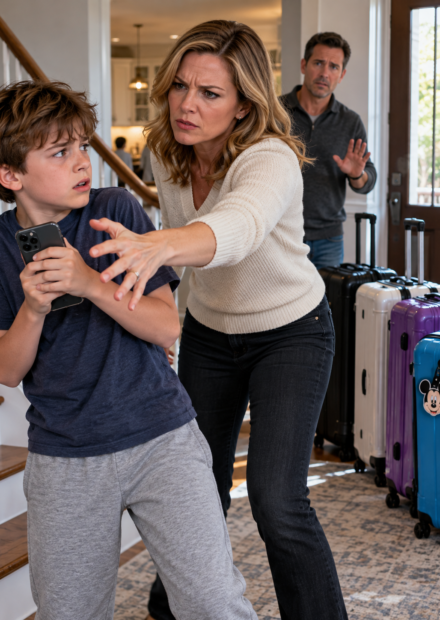
“Harper, you arrived with six suitcases to remove me from my own home.”
“My parents had nowhere to stay.”
“They had a hotel by that evening.”
“That hotel cost almost four hundred dollars a night.”
I waited.
It took her two seconds to hear herself.
“So that was the problem.”
“That is not what I meant.”
“It was expensive for your parents to be inconvenienced.”
“That is not—”
“But my hotel would have cost money too.”
“You can afford it.”
“So can they.”
“They’re retired.”
“So am I.”
“Barbara—”
“No.”
The word came out calmly.
The conversation stopped.
It was extraordinary how much silence one word could produce.
“No what?” she asked.
“No more moving the explanation until it makes you innocent.”
Her voice hardened.
“You have never liked me.”
That one startled me.
“I have never said that.”
“You didn’t need to.”
“Then why have I spent eight years rearranging my life to avoid upsetting you?”
“Because everything I do annoys you.”
“No.”
I stood and walked toward the balcony.
“You know what annoyed me, Harper? When you scheduled Thanksgiving with your family three years in a row and told Daniel I would understand.”
“That was because my grandmother was ill.”
“The first year.”
Silence.
“The next year was because your sister was pregnant.”
“Exactly.”
“The third was because your parents preferred not to drive after dark.”
No response.
“And we moved Christmas because Catherine wanted Christmas morning.”
“You told us that was fine.”
“Yes.”
“That isn’t my fault.”
And there it was.
The sentence I needed to hear.
Because she was right.
Not entirely.
But partly.
“No,” I said.
Harper went quiet.
“It isn’t.”
She had not expected agreement.
“I told you it was fine when it wasn’t. I said I didn’t mind when I did. I allowed Daniel to treat my availability like family property. I let you do the same.”
“This sounds like you’re blaming yourself so you can blame me more.”
“No.”
I watched the evening sun turn the water gold.
“I’m telling you I am responsible for what I taught you about me.”
Harper said nothing.
“I taught you that if you pushed, I moved.”
My throat tightened.
“I’m not teaching that lesson anymore.”
The call became very quiet.
When Harper spoke again, her voice had changed.
Less sharp.
“You really took Daniel off the condo.”
“Yes.”
“Permanently?”
“I don’t know what I’ll do permanently.”
“What does that mean?”
“It means I am sixty-eight years old, Harper. I may live twenty-five more years. I may sell this place. I may keep it. I may leave it to Daniel someday. I may do something else.”
I let the next sentence form slowly.
“The important part is that none of you gets to live as though my death has already transferred ownership.”
Harper did not speak.
I wondered if I had gone too far.
Then I remembered the hotel.
The text.
Are you packed?
No.
I had not gone too far.
I had simply gone somewhere unfamiliar.
Finally, Harper said, “My parents were mortified.”
“I know.”
“My mother cried at the hotel.”
“I’m sorry.”
“She thought you believed they were trying to steal your place.”
“I never believed that.”
“She says she wants to apologize.”
“She already did.”
“She thinks she should again.”
“That is her choice.”
Another pause.
Then Harper said, “I am angry with Daniel too.”
That surprised me.
“Why?”
“Because he let me believe the condo arrangement was different.”
I sat down.
“What did you believe?”
“That after Robert died, it was basically yours for life and then automatically ours.”
“That is not completely wrong.”
“He didn’t tell me you could change it whenever you wanted.”
“Maybe he didn’t want to think about that part.”
“He talked about renovating it.”
My stomach tightened.
“What?”
Harper realized she had said something important.
“Not now.”
“When?”
“Someday.”
I stayed silent.
“He talked about opening the kitchen.”
My eyes moved toward the kitchen wall.
The one Robert had refused to remove because he hated open-concept rooms.
“He said we’d replace the tile.”
I looked down.
“He hated the tile.”
I almost smiled.
Robert had hated the tile from the day we installed it.
The color looked different in the store.
He complained for sixteen years.
Then refused to replace it because, as he said, “At this point we’ve suffered too much to let the tile win.”
Harper continued.
“We talked about making the smaller bedroom into an office.”
I listened.
Not because the renovation plans mattered.
Because they showed me something.
Daniel and Harper had mentally moved into a future where I no longer existed.
Not maliciously.
All families plan for inheritance.
People talk about houses.
Jewelry.
Furniture.
But there is a difference between knowing death comes and arranging somebody else’s belongings in advance.
My condo had become a room they were waiting to enter.
“Barbara?”
“I’m here.”
“I didn’t realize how it sounded.”
“I know.”
For the first time since the argument began, I believed her.
Not because she suddenly became innocent.
Because she finally sounded embarrassed rather than defensive.
“I really did think you would be okay with the hotel.”
“I know that too.”
“I didn’t mean you weren’t important.”
“Intent is comforting to the person who had it.”
She went quiet.
“Impact belongs to the person who receives it.”
Harper sighed.
“My mother says I owe you an apology without explanations.”
“Your mother is a wise woman.”
“She is currently extremely pleased with herself for being right.”
That almost made me laugh.
We sat in silence through the phone.
Then Harper said, “I’m sorry I told them you offered the condo.”
I closed my eyes.
“I knew I had promised something that wasn’t mine to promise.”
That was different.
“I didn’t want to admit that to them.”
I listened.
“And once they were already driving, I decided it would be easier to get you to leave than tell them I had created the problem.”
My throat tightened.
It was nearly identical to what Daniel had done.
Each of them had transferred the cost downward.
Harper could not bear disappointing her parents.
Daniel could not bear confronting Harper.
So the disappointment arrived at me.
The person most likely to absorb it quietly.
“I’m sorry,” she said again.
This time there was no but.
“Thank you.”
She hesitated.
“Does that mean we’re okay?”
There it was.
The old instinct rushed through me.
Say yes.
Make her feel better.
Finish the discomfort.
I breathed.
“No.”
She went silent.
“It means I heard your apology.”
“Oh.”
“We don’t have to be enemies because we’re not instantly okay.”
“I don’t know what to say to that.”
“You don’t have to say anything.”
For once, neither of us did.
When the call ended, I sat outside until the sun disappeared.
The next morning I woke at six.
I made coffee.
Walked barefoot across cool tile.
Opened the balcony doors.
Then I did something ridiculous.
I moved Robert’s iron table.
Only six inches.
Just enough to angle the chair toward the sunrise.
For years I had left it exactly where he placed it.
As though moving furniture might betray the dead.
But Robert was gone.
I was still here.
That difference mattered.
I sat down with my coffee.
My phone remained silent.
Nobody needed money.
Nobody needed babysitting.
Nobody needed the condo.
Nobody needed me to make something easier.
For the first time in years, I discovered that being unnecessary for a morning could feel very much like being free.