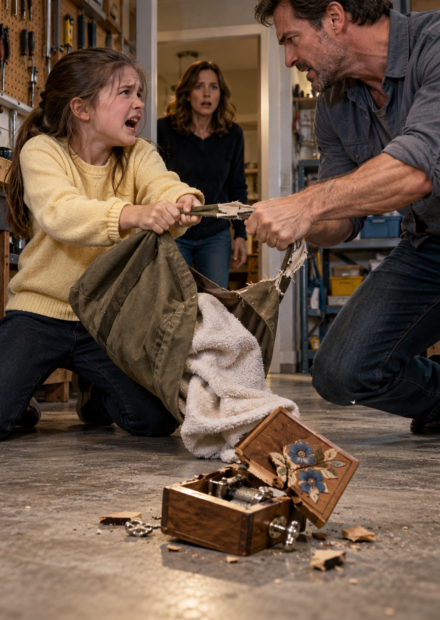
MY SON TOOK THE COAT OFF MY BACK—SO I TOOK HIM TO COURT
Chapter 3 – THE THINGS WE EXCUSE
Margaret Shaw’s office had changed since the last time I visited.
New carpet.
Different receptionist.
Same smell of coffee and paper.
Margaret herself looked almost exactly the same.
Silver hair cut neatly at her chin.
Dark glasses.
A voice that never seemed hurried.
She came around her desk when I entered.
“Evelyn.”
She looked at the sling supporting my right arm.
Then at the bruising near my wrist.
Her mouth tightened.
“I’m glad you came.”
Claire helped me sit.
Margaret waited until we were settled.
Then she folded her hands on her desk.
“Before we talk about anything legal, I want to ask you something.”
“All right.”
“Are you safe?”
“Yes.”
“Are you staying with Daniel?”
“No.”
“Do you intend to go back?”
“No.”
“Good.”
The certainty of her answer startled me.
She noticed.
“I’m not making a legal judgment,” she said. “I’m making a human one.”
I nodded.
She opened a notebook.
“Tell me everything from the beginning.”
So I did.
Again.
This was the first lesson I learned about taking action after something terrible happens.
You have to tell the story over and over.
To doctors.
To family.
To lawyers.
Eventually, possibly, to strangers.
Each telling forces you to decide which words you are willing to use.
The first night, I had said Daniel pulled my coat.
At Margaret’s office, I said he grabbed me through the coat.
Because that was what had happened.
The first night, I had said I fell.
Now I said I fell while he was pulling the coat off my body.
The first night, I had said he went inside.
Now I said he refused to help me and locked the door.
The facts had not changed.
My willingness to hear them had.
Margaret wrote notes.
She asked careful questions.
“Did he threaten you before touching the coat?”
“No.”
“Did he strike you?”
“No.”
“Did he push you with his hands?”
“No.”
“Were you trying to leave?”
“Yes.”
“Did you tell him to stop?”
“Yes.”
“More than once?”
“Yes.”
“Did you ask for help after the fall?”
“Yes.”
“Did he provide any?”
“No.”
“Did he call for medical assistance?”
“No.”
“Did he know you were hurt?”
“I told him.”
She stopped writing.
“All right.”
“What does that mean?”
“It means there are facts here worth taking seriously.”
I felt almost disappointed by the calmness of her answer.
Part of me wanted her to say Daniel was a monster.
Part of me wanted her to say it was nothing.
Either answer would have been easier.
Instead, she gave me reality.
“What happens if I sue him?”
“We discuss exactly what you want first.”
“I want him to understand what he did.”
Margaret’s expression softened slightly.
“A lawsuit may create accountability. It cannot guarantee understanding.”
That sentence stayed with me.
“What can it do?”
“It can put the events on record. It can seek compensation for your medical costs and other harm. It can force him to answer allegations through a legal process rather than by controlling the conversation.”
That last part mattered.
Controlling the conversation.
Daniel was very good at that.
Every argument ended with me defending myself against something I had never said.
“You hate living here.”
“You think I’m a bad son.”
“You’re trying to embarrass me.”
“You want everyone to feel sorry for you.”
By the time the fight ended, the original issue would be gone.
The coat couldn’t disappear that way.
Neither could the hospital record.
Neither could the ambulance.
“What will he do?” I asked.
“I can’t tell you.”
“He’ll be furious.”
“Probably.”
“He’ll say I’m destroying the family.”
“Possibly.”
“He’ll tell people I’m doing this for money.”
“He may.”
“I don’t care about his money.”
“I know.”
“I could pay the hospital bill myself.”
“I know.”
“This isn’t about money.”
Margaret leaned forward.
“Then we need to be very clear about what it is about.”
I looked at my hands.
I thought of the locked door.
“It’s about him believing he can do something like that and then decide it didn’t matter.”
Margaret nodded once.
“That I understand.”
She explained the process.
Carefully.
Without promising me victory.
Without turning my pain into a courtroom fantasy.
She told me there would be uncomfortable questions.
Daniel would have the right to respond.
There could be disputes about exactly how I fell.
I might have to sit in the same room with him.
He might accuse me of exaggeration.
He might apologize.
He might not.
I listened.
And with each warning, I expected myself to become afraid.
Instead, I became clearer.
When we left, Claire asked, “Still want to do it?”
I looked back at Margaret’s office.
“Yes.”
The papers were sent two weeks later.
Daniel called me seventeen times in one day.
I did not answer until the evening.
I sat in Claire’s guest room with the phone on my lap.
My hip was healing.
The bruises had begun turning yellow around the edges.
My shoulder still hurt when I reached too high.
The phone rang again.
Daniel.
I answered.
“What the hell are you doing?”
No hello.
No Mom.
Just rage.
“I’m not discussing the case with you.”
“The case?”
His laugh was sharp.
“You actually filed something against me?”
“Yes.”
“Your own son?”
“Yes.”
“You’ve lost your mind.”
“I’m hanging up.”
“No, you’re not.”
There it was.
The assumption that he still controlled when conversations ended.
I almost smiled.
“I am.”
“Mom, listen to me.”
“I’ve listened to you for years.”
“You fell.”
“While you were pulling my coat.”
“I did not push you.”
“I never said you pushed me.”
“You’re telling people I attacked you.”
“I told my attorney what happened.”
“You were trying to take something that wasn’t yours.”
I looked at the coat hanging across the chair.
“You mean my birthday present?”
“I bought it.”
“You gave it to me.”
“That’s not the point.”
“It became the point when you put your hands on me over it.”
Silence.
For the first time, I had said it directly to him.
Put your hands on me.
He hated the phrase.
I could tell.
“You’re making it sound worse than it was.”
“No. I’m making it sound exactly like it was.”
“You fought me.”
“I tried to keep my coat on.”
“You pulled too.”
“Yes. Because it was on my body.”
“You’re unbelievable.”
“So are you.”
“Do you know what this is going to do to me?”
I closed my eyes.
Of course.
There it was.
Not what did I do to you?
What are you doing to me?
“You should talk to your lawyer.”
“My lawyer?”
“Yes.”
“I need a lawyer because my mother is suing me.”
“You need a lawyer because your mother filed a lawsuit after being injured during an altercation you started.”
“Stop talking like that.”
“Like what?”
“Like Margaret.”
“No, Daniel.”
I looked at my reflection in the dark window.
“I’m talking like myself.”
That frightened him more than anything else I could have said.
I heard it in his breathing.
“Claire did this.”
“No.”
“She always hated me.”
“No.”
“She’s been waiting for something like this.”
“This was my decision.”
“She got in your head.”
“I called Margaret before Claire even arrived.”
He went quiet.
I knew exactly why.
He had built a version of events in which I was weak.
Confused.
Manipulated.
Anything except capable of deciding he had crossed a line.
“You really called a lawyer from the hospital?”
“From your front yard.”
Another silence.
“What?”
“I called Margaret while I was still sitting outside your house.”
I almost wished I could see his face.
“Before the ambulance came.”
“You were planning this immediately?”
“I was sitting on frozen concrete because my son had locked me out after I fell.”
“Stop saying it like that.”
“How should I say it?”
“You make it sound like I threw you out there.”
“You closed the door.”
“You were leaving.”
“I was injured.”
“You were conscious.”
The sentence stunned me.
“You were conscious.”
As if that were the standard.
As if I should be grateful he had abandoned me only while I was awake.
Something inside me became very still.
“Goodbye, Daniel.”
“Mom—”
I ended the call.
He sent messages afterward.
Some angry.
Some pleading.
Some accusing.
One simply said:
I never thought you would do this to me.
I stared at it for a long time.
Then I typed a response.
I never thought you would do what you did to me.
I didn’t send it.
I deleted the words.
Margaret had told me not to argue with him about the case.
More importantly, I no longer needed to win arguments with Daniel.
That had become the trap.
I needed to stop participating in them.
Over the following weeks, I began looking for another apartment.
Claire wanted me to stay with her permanently.
I loved my sister.
I also knew myself.
If I moved from Daniel’s house directly into Claire’s forever, some part of me would continue believing I needed permission to live my own life.
So I searched.
One-bedroom units.
Senior communities.
Regular apartment buildings.
Places near grocery stores.
Places with elevators.
Places with windows facing east because I had always loved morning light.
For the first time in fourteen months, I asked myself a question I should never have stopped asking.
What do I want?
Not what would make Daniel feel less guilty.
Not what would make Claire worry less.
Not what would look sensible to other people.
What did I want?
I wanted a yellow kettle.
I had owned one years earlier.
Daniel hated bright colors in his kitchen.
I wanted books stacked beside my chair.
I wanted to leave the heat at seventy-two degrees.
I wanted to play music while I cooked.
I wanted to close a bedroom door and know nobody would open it without knocking.
Tiny things.
Ridiculously tiny.
And yet each one felt like reclaiming an inch of ground.
Daniel, meanwhile, changed tactics.
The angry messages stopped.
Then came the soft ones.
Mom, I’ve been thinking.
I hate that things got this far.
We both said things.
I’m sorry you were hurt.
I love you.
Please don’t let lawyers tear this family apart.
That message almost broke me.
Because it contained just enough of what I wanted.
I’m sorry.
I love you.
But never:
I was wrong.
Never:
I should have helped you.
Never:
I had no right to grab you.
Never:
I left you outside, and that was cruel.
He was sorry about the situation.
Sorry about the consequences.
Sorry about the lawyers.
But accountability remained one step beyond what he was willing to say.
I showed the message to Margaret at our next meeting.
She read it and handed the phone back.
“How does it make you feel?”
“Sad.”
“Why?”
“Because part of me wants to accept it.”
“You can love him and still continue.”
I looked at her.
“That sounds cruel.”
“No. It sounds complicated.”
“I’m his mother.”
“Yes.”
“Shouldn’t that mean something?”
“It does.”
“What?”
“It means this hurts more.”
I cried then.
Not dramatically.
Not loudly.
Just quiet tears I had apparently been saving for months.
Margaret passed me a tissue and waited.
“I miss him,” I admitted.
“I know.”
“He did good things too.”
“I’m sure he did.”
“He wasn’t always like this.”
“I believe you.”
“I don’t want him ruined.”
“Then be clear with me about that.”
“I want him to understand.”
Margaret nodded.
“Evelyn, there is something you may need to accept.”
“What?”
“You cannot control whether Daniel becomes a better person because of this.”
I wiped my eyes.
“Then what am I doing?”
“You are deciding what happens when someone hurts you.”
That was the real beginning.
Not the lawsuit.
Not the fall.
That sentence.
I had spent seventy-two years believing love was measured by how much pain you could absorb without leaving.
Maybe I had been wrong.