





















THEY CHANGED THE LOCKS WHILE I WAS VISITING MY SISTER—BUT THEY DIDN’T KNOW WHOSE HOUSE IT REALLY WAS
Chapter 3 – What a Mother Is Supposed to Forgive
Daniel did not speak to me for the rest of that morning.
At least not directly.
He spoke around me.
To Margaret.
To Thomas.
To Melissa.
At one point he called someone—I assumed a lawyer—and stood on the back patio for nearly forty minutes.
Melissa was less quiet.
“This is insane.”
She said it at least six times.
Nobody argued with her.
Margaret had explained the basics.
The trust owned the house.
I possessed the right to occupy it.
Thomas had authority and responsibility over the property.
Daniel and Melissa could not simply exclude me because they believed I should leave.
At the same time, Thomas could not throw their belongings onto the sidewalk that afternoon.
There was a process.
A notice period.
Rules.
Documentation.
I was glad.
Not because I wanted them protected from consequences.
Because I did not want to become them.
I did not want Lily coming home one day to find her clothes in the driveway.
I did not want Daniel to feel exactly what I had felt if there was a lawful alternative.
Justice did not have to be symmetrical to be justice.
By noon, Margaret and Thomas left.
Before going, Thomas handed me two new keys.
“The locksmith will be here at two.”
Daniel overheard him.
“You’re changing the locks again?”
Thomas looked at him.
“Yes.”
“You just said we can stay during the notice period.”
“You can.”
“So why change them?”
“Because Eleanor gets a key.”
“We already told you we’d give her one.”
Thomas paused.
“The fact that you believe the decision remains yours is precisely why the lock is being replaced.”
Daniel turned away.
At two-fifteen, a locksmith named Gary removed the locks Daniel had installed less than forty-eight hours earlier.
I watched from the kitchen.
There was something almost ceremonial about it.
Metal turning.
Screws loosening.
The bright new deadbolt coming free.
Gary held it in his palm.
“Want to keep this?”
I looked at it.
“No.”
Then I changed my mind.
“Actually, yes.”
He handed it to me.
I placed it in the kitchen drawer where Frank used to keep batteries and rubber bands.
For a long time, I couldn’t explain why I kept it.
Later I understood.
Some people keep photographs to remember love.
Sometimes you need objects to remember truth.
That evening, I cooked nothing.
Melissa ordered pizza for herself, Daniel, and Lily.
Nobody offered me any.
I wasn’t hungry anyway.
I sat in my blue chair, which I had moved back to its old place.
Frank’s picture was again on the hallway table.
My knitting basket was beside me.
The small restoration felt both satisfying and pathetic.
Was this what my life had become?
Celebrating the return of objects that never should have been moved?
At seven, Lily crept into the living room.
“Grandma?”
“Yes, sweetheart?”
She glanced toward the kitchen.
“Are Mom and Dad mad at you?”
Children rarely ask the question you want.
“No.”
She frowned.
“They look mad.”
“They’re upset about a grown-up decision.”
“Are they leaving?”
I put my knitting down.
This was what I had feared most.
Not Daniel’s anger.
Not Melissa’s resentment.
Lily.
She had done nothing.
She had not changed my locks.
She had not boxed my belongings.
She was a child who believed this house was home.
I patted the cushion beside me.
She sat.
“Your mom and dad are going to find another place to live.”
Her eyes widened.
“Why?”
“Because sometimes adults living together stop being good for each other.”
“Did I do something?”
The speed of the question nearly stopped my heart.
“Oh, honey. No.”
I took both her hands.
“You did absolutely nothing.”
“Then why can’t we stay?”
I chose my words carefully.
“Because your parents and I need separate homes.”
“Will I still see you?”
“Of course.”
“How much?”
“As much as your parents and I can arrange.”
She looked close to tears.
I pulled her against me.
“I love you,” I whispered.
She hugged me.
“I love you too.”
Over her shoulder, I saw Daniel standing in the doorway.
He had heard.
Our eyes met.
For the first time since I returned, his anger disappeared.
He looked frightened.
Not of losing the house.
Of losing something else.
His daughter’s sense of safety.
Maybe mine too.
Lily went upstairs ten minutes later.
Daniel stayed in the doorway.
“Did you have to tell her tonight?”
“Yes.”
“We were going to explain it.”
“When?”
He flinched.
I regretted my tone but not the question.
He came into the living room.
“Can we talk?”
I pointed toward the sofa.
He sat.
For several seconds, neither of us spoke.
Then Daniel said, “I know changing the locks looks bad.”
I actually laughed.
He frowned.
“What?”
“It doesn’t look bad.”
“Mom.”
“It was bad.”
“We handled it wrong.”
“You planned it.”
“We panicked.”
“About what?”
He rubbed his hands together.
“Everything.”
I waited.
“Our savings are almost gone.”
That surprised me.
“You told me you were close to having enough for a down payment.”
“We were.”
“What happened?”
“Life happened.”
“That isn’t an answer.”
He looked toward the floor.
“My hours got cut last winter. Melissa had medical bills from her surgery. The car needed a transmission. Lily’s dental work—”
“Why didn’t you tell me?”
His face twisted.
“Because I’m forty-four years old, Mom.”
“And?”
“And I’m tired of telling my mother I can’t make it.”
The anger left me a little.
Not enough.
But a little.
“So you decided to take the house.”
His head snapped up.
“We didn’t take anything.”
“You locked me out.”
“We thought if you moved—”
“If I moved what?”
He looked ashamed.
“We could stay.”
I stared at him.
“For how long?”
“We didn’t know.”
“And then?”
He said nothing.
“Daniel.”
“If the house eventually came to me anyway—”
There it was.
The thought I had feared.
He spoke quickly.
“I know how that sounds.”
“Do you?”
“You always said everything would be mine.”
“When you were twelve.”
“You’ve said it since Dad died.”
“I said I had no intention of cutting you out of my estate.”
“Exactly.”
“No.”
His brow furrowed.
“No?”
“No. That is not the same as telling you that you may take possession of my life while I’m still living it.”
He leaned back.
“That’s not what I meant.”
“It is exactly what you did.”
“We thought the senior community might be good for you.”
“Then why didn’t you wait until I agreed?”
He looked away.
“Because you never would.”
My voice became quiet.
“So you forced it.”
“We thought once you were out of the house, you’d calm down.”
I stared at him.
He seemed to hear his own words only after they were spoken.
“You thought I would calm down?”
“That came out wrong.”
“No. I think it came out accurately.”
“Mom—”
“You and Melissa decided where I should live. You waited until I left town. You changed the locks. You boxed my belongings. And because you assumed you would inherit the house someday, you told yourselves you were merely speeding up an inevitable transfer.”
His face had gone pale.
“When you say it like that—”
“How else should I say it?”
“I don’t know.”
He covered his face with both hands.
For a second, he was my little boy again.
And that was the danger.
Mothers are trained by love to recognize the child inside the adult.
It makes forgiveness easy.
Sometimes too easy.
I waited until he lowered his hands.
“Did Melissa suggest changing the locks?”
He stared at me.
I had wondered since yesterday.
His answer mattered.
But perhaps not for the reason he thought.
“Yes.”
Something inside me tightened.
Then he continued.
“And I agreed.”
I nodded.
He looked surprised.
“You’re not going to blame her?”
“No.”
“Why?”
“Because you’re my son.”
“I don’t understand.”
“I am not interested in pretending your wife made you do something you chose.”
He sat back.
“She was worried we’d lose everything.”
“And you were too.”
“Yes.”
“So you made a terrible decision together.”
His mouth tightened.
“Yes.”
It was the first honest thing either of us had said without qualification.
I breathed out slowly.
“Thank you.”
He looked confused.
“For what?”
“For not hiding behind her.”
He stared toward the hallway.
“Are you really making us leave?”
I looked at him.
“Yes.”
His eyes filled.
He blinked hard.
“Even after I apologized?”
“You haven’t apologized.”
“I just said it was a terrible decision.”
“That is describing your decision.”
He swallowed.
“Fine.”
Silence.
Then he said, “I’m sorry.”
I waited.
His frustration returned.
“What else do you want?”
“I want you to understand what you are apologizing for.”
“I changed the locks.”
“No.”
He stared at me.
“No?”
“The lock was the action. What did you believe gave you the right to do it?”
He stood.
“This is turning into some therapy session.”
“Sit down.”
He looked at me.
I had not used that tone with him in years.
Slowly, he sat.
“You believed my age made your judgment more important than mine.”
He looked away.
“You believed because you expected to inherit my property, you had some advance claim to it.”
“Mom—”
“You believed your financial problems justified taking control of my home.”
He opened his mouth.
I raised my hand.
“And worst of all, you believed my love for you meant I would eventually accept it.”
His eyes met mine.
That was the one.
I saw it.
He knew.
I leaned back.
“You thought I would forgive you before you even did it.”
He didn’t answer.
“That is why you felt safe.”
His eyes filled again.
“I never wanted to hurt you.”
“I believe you.”
He looked almost relieved.
Then I continued.
“But wanting not to hurt someone does not matter very much if you decide you’re entitled to hurt them anyway.”
Daniel cried then.
Quietly.
Not dramatically.
He looked down and rubbed his thumb against his palm.
I wanted to cross the room.
I wanted to put my hand on his head the way I had when he was a child with a fever.
I did not.
There is a difference between withholding love and refusing to erase consequences.
I was finally learning it.
After a while, he said, “Dad would hate this.”
My heart stopped.
It was the cruelest thing he had said.
Perhaps he knew it the moment he said it.
“I didn’t mean—”
“Yes, you did.”
He looked sick.
I stood.
“Your father spent thirty-seven years paying for this house.”
“Mom—”
“He replaced that porch himself. He planted the maple tree. He refinished the floors. He spent his last healthy summer rebuilding the back fence because he said he wanted me to have one less thing to worry about after he was gone.”
My throat closed.
I forced myself to continue.
“Do not use your father to defend what you did.”
“I’m sorry.”
“No. Listen to me.”
He did.
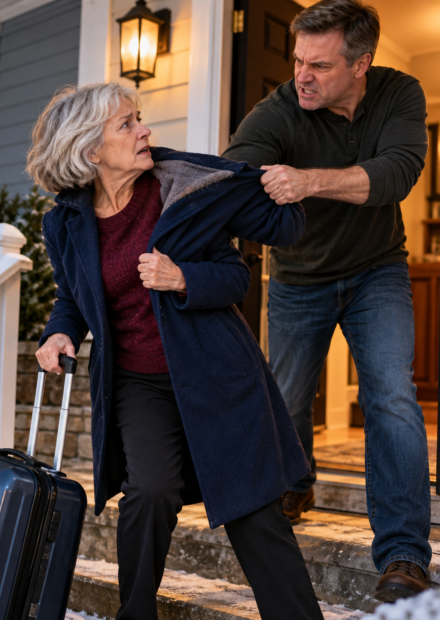
“If Frank had seen his son lock me out of our home while I was away visiting Ruth, yes, he would hate this.”
Daniel’s face crumpled.
“But he would not hate what I am doing.”
I walked toward the staircase.
Behind me, Daniel whispered, “How do you know?”
I turned.
“Because your father is the reason I made the trust.”
Daniel stared at me.
I had never told him that part.
Not completely.
Two years after Frank died, I received a letter offering to buy the house.
Nothing unusual.
Developers were buying older homes in the neighborhood.
Daniel happened to see it on the counter.
He picked it up and said, “You should consider it.”
I told him I wasn’t interested.
He pushed.
Not aggressively.
Not then.
But enough that I mentioned it to Ruth.
She mentioned it to Thomas.
Thomas said something I initially found insulting.
“You need a plan for what happens if one day you’re pressured into signing something you don’t fully want.”
I was furious.
“I’m not senile.”
“I didn’t say you were.”
“Then why are you talking to me like I’m helpless?”
“I’m talking to you like you’re a widow with a valuable asset and one child who assumes he’ll inherit it.”
I didn’t speak to him for nearly two weeks.
Then one night I opened Frank’s old desk.
Inside was a note in his handwriting.
Nothing dramatic.
Just a list of things to repair.
At the bottom he had written:
Make sure Ellie never has to leave unless she wants to.
I sat on the floor and cried.
A month later, I called Thomas.
The trust was created soon afterward.
Not because I believed Daniel would betray me.
Because Frank and I had built something together, and I wanted to protect my right to remain inside it.
Daniel listened without interrupting.
When I finished, he looked toward his father’s photograph.
“So Dad didn’t know about the trust.”
“No. He was already gone.”
“But you did it because of him.”
“Yes.”
“And because of me.”
I did not answer.
He understood anyway.
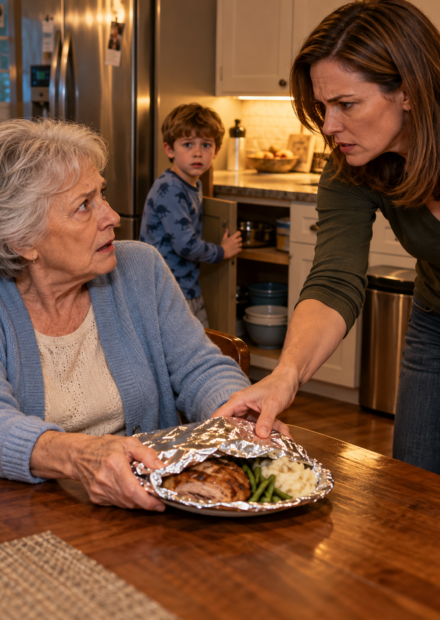
The next morning, Melissa confronted me in the kitchen.
She waited until Daniel had taken Lily to school.
“Are you happy?”
I looked up from my coffee.
“About what?”
“You know what.”
“No, Melissa. I’m not happy.”
“You got what you wanted.”
I almost admired the audacity.
“What did I want?”
“Your house back.”
“My house was never gone.”
She gave a bitter laugh.
“Technically.”
I set my cup down.
“Be careful with that word.”
She folded her arms.
“We gave up eight years of our lives here.”
“You lived here without rent for eight years.”
“We contributed.”
“I never said you didn’t.”
“We took care of you.”
Sometimes a sentence reveals the entire story a person has been telling themselves.
I looked at her.
“You took care of me?”
“Yes.”
“How?”
Her mouth opened.
Then closed.
“We cooked.”
“Sometimes.”
“We drove you places.”
“When we were already going somewhere.”
“We helped with the house.”
“Yes. You did.”
“We made sure you weren’t alone.”
That one hurt.
Because there had been nights when I was grateful to hear Lily laughing upstairs.
There had been mornings when Daniel carried groceries in without being asked.
There had been Thanksgiving dinners that felt warm and whole because the house was full.
I would not rewrite those years as misery simply because the ending was cruel.
“You did bring life into the house,” I said.
Melissa looked surprised.
“And for that, I was grateful.”
She softened slightly.
Then I continued.
“But gratitude is not ownership.”
Her face hardened again.
“We weren’t trying to steal anything.”
“You changed the locks.”
“We were trying to move the situation forward.”
“Without me.”
“You kept refusing every reasonable option.”
“For my own house.”
“You don’t need a four-bedroom house.”
There it was.
Not “you can’t manage it.”
Not “you’re unsafe.”
You don’t need it.
As if ownership were determined by need.
“You don’t need the diamond earrings you’re wearing,” I said.
Her hand went to one ear.
“What does that have to do with anything?”
“Should I take them?”
“Of course not.”
“Why?”
“Because they’re mine.”
I waited.
Understanding flashed across her face.
She looked away.
“That’s different.”
“No.”
“It is.”
“How?”
“They’re earrings.”
“And this is a house?”
“Yes.”
“So because my property is more useful to you, your need matters more than my ownership.”
“That’s not what I said.”
“It is what you did.”
She grabbed her purse from the counter.
Before leaving, she turned.
“You’re going to lose Daniel over this.”
The words landed hard.
She saw it.
Maybe that was why she said them.
I sat very still.
“Maybe,” I said.
Her expression flickered.
She had expected me to argue.
“But if keeping my son requires letting him decide when I no longer deserve my own front door, then I lost him before I came home Sunday.”
Melissa left.
I sat alone in the kitchen.
And for the first time since the lockout, I felt afraid of the price of winning.