





















THE BIRTHDAY WISH MY AUNT TRIED TO BURY
Chapter 3 – THE LIE SHE NEEDED EVERYONE TO BELIEVE
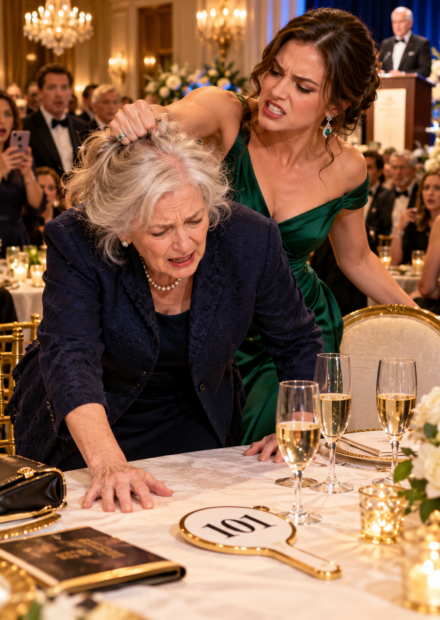
Aunt Evelyn left the party without saying goodbye.
Nobody tried to stop her.
Before she walked out, she looked at me once.
I expected anger.
Instead, I saw something worse.
Calculation.
That frightened me more than shouting would have.
Roman’s security men did not follow her.
There was no dramatic arrest.
No police officer waiting outside.
No handcuffs.
Real life was disappointingly quiet.
Mr. Bennett gathered the documents.
He and Roman photographed every page.
Mom signed a statement acknowledging that she had not known the true status of the trust.
My grandmother called Evelyn twice.
Both calls went unanswered.
And I sat in Dad’s office staring at the brass key.
Someone had placed it on the desk.
It looked ordinary again.
That bothered me.
It had just changed my entire family.
Keys should look more important after doing something like that.
My mother eventually knelt beside me.
“We’re going home.”
“What about my birthday?”
The moment I asked, I wished I hadn’t.
Mom’s face crumpled.
“I’m sorry.”
I looked toward the hall.
Most people had gone.
The balloons were still there.
So were the paper plates.
The trash bin had finally been removed.
My cake was gone.
“Did I ruin it?”
My mother grabbed me.
“No.”
Her answer came so quickly it almost hurt.
“No, Mason.”
“But everybody was fighting because of me.”
“Not because of you.”
“The key was mine.”
“That doesn’t make this your fault.”
I buried my face against her shoulder.
She whispered, “Your father wanted the truth found.”
“Why didn’t he tell you?”
That question hurt her.
I felt it in the way her arms tightened.
“I think he thought he had more time.”
Roman stood near the door.
My mother looked up at him.
“You knew Daniel hid things for Mason?”
Roman shook his head.
“Not where.”
“Why the birthday chair?”
He glanced at me.
Then at the old oak chair visible through the doorway.
“Daniel and Evelyn both knew family tradition mattered to their mother. No matter who controlled the party, Mason would be sitting in that chair.”
My mother closed her eyes.
Of course.
Dad hadn’t known exactly what would happen.
He had known his sister.
That was enough.
Later, Roman explained more.
Dad’s illness had given him a terrible kind of clarity.
He didn’t fully distrust Evelyn.
Not at first.
But he had noticed the way she pushed into decisions.
The way she resented Roman’s involvement.
The way she spoke about the family business as though blood entitled her to control.
Dad created checks.
Roman was one.
Mr. Bennett was another.
The hidden key was the last.
My sixth birthday mattered because the trust’s first formal beneficiary review was scheduled for the month I turned six.
At least it was supposed to be.
If everything was functioning properly, Mom would have received updated documents before the date.
If it wasn’t, Dad had apparently wanted someone to open the drawer.
He had chosen a childish trigger because it was something I would understand.
Birthday.
Evelyn.
Roman.
Key.
Four things.
Simple.
My father had built a warning for a child because he feared the adults might fail.
And they had.
That night, Mom and I returned home.
Our house felt different.
Nothing had changed physically.
Dad’s photograph remained in the hallway.
My toys were still in the living room.
There were dishes beside the sink.
But for the first time, I watched my mother walk from room to room as if she didn’t know whether the house belonged to us.
At bedtime, she sat beside me.
“Do you remember what Aunt Evelyn said to you before the party?”
“About the drawer?”
“Anything.”
I thought.
Children remember strange details.
I remembered the cake more clearly than entire months of my childhood.
I remembered Evelyn’s fingers around my wrist.
I remembered her perfume.
I remembered a small piece of tape stuck to my thumb after I removed Dad’s note from beneath the chair.
“She kept asking about the key.”
Mom nodded.
“Before you showed it to anyone?”
“Yes.”
“What exactly did she say?”
I told her.
Where is the key?
Tell me where you put it.
Mom looked down.
“She knew.”
“What?”
“Nothing.”
But it wasn’t nothing.
She kissed my forehead and turned off the lamp.
An hour later, I woke up.
Someone was talking downstairs.
Roman.
I got out of bed.
I sat on the top stair where I had once listened to Evelyn call me manipulative.
This time, I heard my mother.
“How bad is it?”
“We don’t know yet.”
“Don’t protect me.”
“I’m not.”
“Then tell me what you know.”
Roman paused.
“The transfers started smaller.”
“How small?”
“Several thousand at a time.”
My mother inhaled.
“Then?”
“They increased.”
“How much is missing?”
“We need bank records.”
“You saw the ledger.”
“The ledger may not be complete.”
“Roman.”
He spoke softly.
“Enough that Evelyn knew discovery would destroy her.”
I pressed my face between the stair rails.
Mom said, “Why would Daniel put her in charge at all?”
“Temporary authority. Ninety days after his death, renewable only with Claire’s written consent and reporting requirements.”
“I signed something.”
“You were grieving.”
“That’s not an excuse.”
“No. It’s context.”
My mother began crying.
“I let her into everything.”
“You trusted family.”
“I trusted her with Mason.”
Roman said nothing.
That silence stayed with me.
Mom’s voice broke.
“She has been telling everyone my son is a liar for years.”
“I know.”
“Do you?”
“Yes.”
“Why didn’t you say anything?”
“I wasn’t here.”
“Exactly.”
Roman accepted that too.
After a moment, he said, “I let Evelyn push me out because you seemed to want space.”
“I didn’t.”
“I know that now.”
“She told me you were angry with Daniel.”
Roman’s voice changed.
“What?”
“She said you believed he mishandled some investment. She said you didn’t want responsibility for us.”
“Claire, Daniel was my brother in every way except blood.”
“I know.”
“No. You used to know.”
Silence.
Then Mom whispered, “I don’t know what I know anymore.”
I went back to bed before they found me.
For the next week, adults came and went.
Mr. Bennett.
An accountant.
A new attorney my mother hired independently.
Roman.
Bank representatives spoke on conference calls.
Documents appeared across our dining table.
Mom began keeping a notebook.
Every question.
Every date.
Every answer.
I had never seen her like that.
Grief had made her soft-spoken.
Fear had made her compliant.
Anger made her organized.
She went through old files.
Emails.
Letters.
Bank notices.
I colored at the opposite end of the table while she reconstructed two years of our life.
One afternoon she suddenly stopped.
“What?”
I asked.
She was holding an envelope.
“This was returned.”
“What is it?”
“A letter.”
Roman had sent it thirteen months earlier.
It was addressed correctly.
Someone had written REFUSED across the front.
Mom stared at the handwriting.
I recognized it.
“So did I.”
Aunt Evelyn.
That evening Roman came over.
Mom gave him the envelope.
He looked at the word.
“She told me you rejected it.”
“I never saw it.”
He laughed bitterly.
“What did it say?”
Roman opened his phone and found a copy.
He read it.
He had been requesting a formal trust review.
He mentioned missing statements.
He asked my mother to contact him directly.
He warned that no administrative trustee should be moving funds without independent oversight.
Aunt Evelyn had made sure the letter never reached us.
That was not new evidence from nowhere.
It was the shape of what we had already found.
One lie connected to another.
Then another.
The story of my aunt’s control wasn’t built from one brilliant deception.
It was built from small things.
A phone call not passed along.
A letter refused.
A document placed inside a stack.
A grieving widow told, Sign here.
A family friend described as dangerous.
A child described as dishonest.
Nothing dramatic enough by itself to make everyone revolt.
Together, it had been a cage.
I didn’t have the words for that then.
I only knew my mother started apologizing to me.
Too often.
At breakfast.
In the car.
While folding laundry.
“I’m sorry I let her say those things.”
“Okay.”
“I’m sorry I didn’t stop her sooner.”
“Okay.”
“I’m sorry about your birthday.”
That one made me stop.
“Mom.”
“Yes?”
“If you keep saying sorry, does that mean I have to keep thinking about the cake?”
She stared at me.
Then laughed through tears.
“No.”
“Good.”
She hugged me.
After that, she apologized less and acted more.
The first major fight came nine days after my birthday.
Evelyn appeared at our house.
No warning.
I was building a cardboard spaceship in the living room.
Mom opened the door but didn’t let her in.
I heard my aunt say, “We need to speak privately.”
Mom answered, “My attorney told me not to discuss the trust with you.”
“This isn’t about the trust.”
“What is it about?”
“Mason.”
I stopped cutting cardboard.
Mom went still.
“What about him?”
“He needs professional help.”
Even at six, I knew that sentence wasn’t kindness.
My mother knew too.
“For what?”
“His behavior.”
“What behavior?”
Evelyn lowered her voice.
“He fabricated an accusation that has turned the entire family against me.”
I stood up.
My hands were shaking.
Mom said, “He didn’t fabricate anything.”
“He lied about going into the office.”
“He didn’t go into the office.”
“You don’t know that.”
“The drawer was still locked.”
“He could have locked it again.”
“Without the key?”
Evelyn hesitated.
Mom stepped onto the porch and closed the door partly behind her.
I moved closer anyway.
“He found the key under the birthday chair,” Mom continued. “You accused him before you knew he had it.”
“He was snooping.”
“He dropped a napkin.”
“You believe everything he says.”
“Yes.”
The word came without hesitation.
I stopped breathing.
Evelyn did too.
Mom repeated it.
“Yes. I believe my son.”
“You are making a mistake.”
“The mistake was allowing you to convince me that loving him meant I lacked judgment.”
“Claire—”
“No.”
My mother’s voice sharpened.
“You will not describe him as manipulative again. You will not tell relatives he lies. You will not contact his school. You will not punish him. You will not be alone with him.”
Evelyn stared at her.
“You’re choosing a child over your family.”
Mom answered, “He is my family.”
I sat down on the floor.
My cardboard spaceship blurred.
I cried without making a sound.
Not because I was sad.
Because a part of me I didn’t know had been waiting finally relaxed.
My mother believed me.
Not privately.
Not cautiously.
Not until another adult disagreed.
Completely.
Evelyn looked over Mom’s shoulder.
She saw me.
Our eyes met.
She knew I’d heard everything.
“Ask him,” she said suddenly.
Mom frowned.
“Ask him what?”
“Ask him why he didn’t show you the key immediately.”
I froze.
Evelyn noticed.
There it was.
The old method.
Find the hesitation.
Turn it into suspicion.
Mom looked at me.
Not accusing.
Just waiting.
I wiped my face.
“I wanted to read Dad’s note first.”
“Why?”
“Because it was from Dad.”
Mom nodded.
That should have ended it.
Evelyn kept going.
“Or because he went into the office.”
“No.”
“Mason—”
“No!”
My whole body shook.
“I didn’t go in!”
She pointed at me.
“There. Look at him.”
Mom turned.
Not toward me.
Toward Evelyn.
“Get off my property.”
Evelyn stared at her sister-in-law.
“You’ll regret this.”
“I regret enough already.”
The door closed.
Mom locked it.
I stood in the living room.
She turned toward me.
For several seconds neither of us spoke.
Then I asked, “Am I in trouble for yelling?”
My mother’s face collapsed.
She crossed the room and held me.
“No.”
“Even though I yelled at an adult?”
“Sometimes adults are wrong.”
I whispered, “Dad knew she was wrong.”
Mom looked toward his photograph.
“I think your dad knew she could be.”
The investigation continued.
What emerged was worse than a single desperate transfer.
Evelyn had moved trust money to prop up a failing business.
Then, when that money didn’t solve the problem, she moved more.
She paid it back once.
Then borrowed again.
She changed mailing addresses for statements.
She authorized herself additional administrative fees.
She told my mother the trust contained very little.
She told Roman my mother wanted no contact.
She told the extended family that my behavioral problems were exhausting Claire.
That last lie suddenly made terrible sense.
If people saw my mother overwhelmed by me, they were less likely to question why Evelyn handled so much.
If I complained about Evelyn, people already knew I lied.
If I said she entered Dad’s office, I was snooping.
If I said she took something, I was imaginative.
My reputation had become part of her security system.
That hurt my mother more than the money.
It hurt me in a way I didn’t understand until years later.
Money can be restored.
Numbers can be audited.
Accounts can be frozen.
But when an adult teaches a child that his own memory is less trustworthy than her version of him, that damage has no simple accounting.
The near-breaking point came when my grandmother called.
She asked to speak with me.
Mom stayed nearby.
Grandma said, “Your aunt is having a very hard time.”
I didn’t answer.
“She loves you.”
I looked at Mom.
Mom said nothing.
Grandma continued.
“Sometimes grown-ups make mistakes when they’re frightened.”
“She threw my cake away.”
“I know.”
“Was that a mistake?”
Grandma was silent.
I waited.
Finally she said, “Yes.”
“She said I lied.”
“I know.”
“Was that a mistake?”
Another silence.
“Yes.”
“She took Dad’s money.”
My grandmother started crying.
“I don’t understand the financial details.”
That phrase made me angry.
Even at six.
Adults used complicated words when simple ones hurt.
I asked, “Did she take it?”
Mom closed her eyes.
Grandma whispered, “Yes.”
“Then why does everybody keep asking me to make her feel better?”
There was no answer.
That question traveled through the family faster than any lawyer’s letter.
After that, fewer people called.
Something had shifted.
Evelyn had spent years making me the child whose emotions were inconvenient.
Now the adults were beginning to realize they had been asking a six-year-old to carry the emotional comfort of the person who hurt him.
For the first time, the burden moved where it belonged.
Back to them.
Two weeks after my birthday, Roman arrived at our house with Mr. Bennett.
They had the completed preliminary accounting.
Mom asked me to play upstairs.
I refused.
“It’s about me.”
She hesitated.
Roman said, “Let him stay for the beginning.”
So I sat at the dining table.
Roman placed a folder in front of my mother.
“We found the missing payments.”
My stomach tightened.
Mom looked at the first page.
“All of them?”
“Most.”
“Where did they go?”
Roman’s answer was simple.
“To Evelyn.”
My mother turned the page.
Then another.
Then another.
I watched her eyes move across the numbers.
She did not cry.
That frightened me more.
“Can she put it back?”
Mr. Bennett answered carefully.
“Some assets can be recovered.”
“Some?”
“Her company is heavily indebted.”
Mom looked at Roman.
“What happens now?”
Roman folded his hands.
“That depends partly on you.”
Then he looked at me.
“And partly on making sure Mason never has to depend on Evelyn’s version of the truth again.”
I thought the truth had already surfaced.
I was wrong.
There was one confrontation left.
And this time, Aunt Evelyn would not have a room full of silent people protecting her.