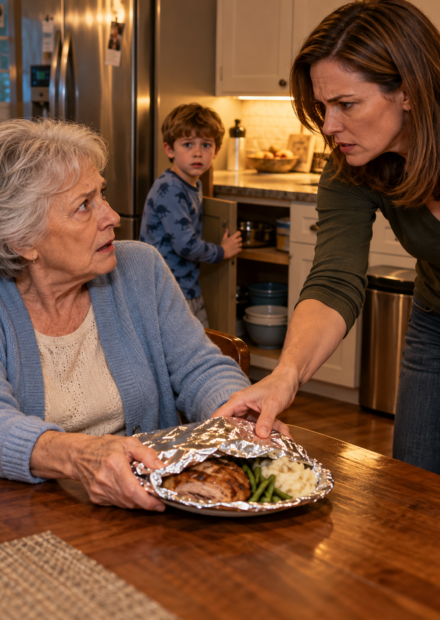






















THEY TOOK MY WALKER TO MAKE ME SIGN. THEY FORGOT THE PROPERTY WAS STILL MINE
Chapter 3 – WHAT THEY THOUGHT I COULDN’T SEE
My knee was swollen the next morning.
Not badly.
But enough to remind me that the previous afternoon had been real.
I saw my doctor first.
He examined the joint, asked what happened, and became very quiet when I told him.
“No fracture,” he said after the imaging came back. “Looks like a strain. But Mary, you were lucky.”
Lucky.
The word followed me all the way to Harold’s office.
Lucky I had caught the sofa.
Lucky I had not broken my hip.
Lucky Daniel had returned the walker after I nearly fell.
Lucky Rebecca had not physically grabbed me.
What a miserable standard for luck.
Harold met me in the lobby.
He was seventy himself now, tall and thinner than he had been in Thomas’s day.
He did not reach for my walker.
He did not grab my elbow.
He simply walked at my pace.
That courtesy nearly made me cry again.
In his office, I handed him the contract.
He read every page.
I watched his eyes move.
At one point he removed his glasses and cleaned them.
That was a habit of his whenever he was thinking.
Finally, he placed the papers down.
“There’s nothing obviously improper about the offer itself.”
I nodded.
“So they were right?”
“About the price being reasonable? Probably. About needing your signature immediately? No.”
I leaned back.
He tapped the date.
“You caught this.”
“They had it four days.”
“Yes.”
“Could the buyer really have needed an answer yesterday?”
“He could have requested one. But I don’t see any written expiration requiring a response yesterday afternoon.”
My jaw tightened.
“They lied.”
“At minimum, they exaggerated the urgency.”
Harold rotated the contract toward me.
“Do you want to sell?”
The question surprised me.
After two days of everyone discussing documents and deadlines, no one had asked me so simply.
Did I want to sell?
“I don’t know.”
“Then don’t.”
I looked at him.
He shrugged slightly.
“You can decide later.”
“That simple?”
“It’s your property.”
I laughed once.
No humor in it.
“Apparently that’s become complicated.”
Harold folded his hands.
“Tell me exactly what happened yesterday.”
So I did.
Every sentence.
Rebecca arriving first with lunch.
Daniel arriving ten minutes later.
The contract.
The pressure.
My request to speak with Harold.
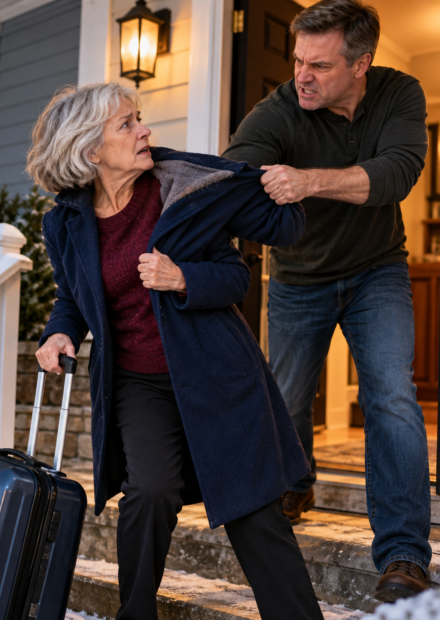
Daniel taking my walker.
Rebecca standing near the door.
My attempt to cross the room.
My knee buckling.
When I finished, Harold sat silently for a moment.
“Did either of them threaten you?”
“Not with words.”
“Did either physically hold you down?”
“No.”
“Did Daniel refuse to return the walker before you tried to stand?”
“Yes.”
“Did you clearly tell them you wanted to leave the table?”
“Yes.”
He nodded slowly.
“Then whatever their intentions were, they crossed a serious line.”
I stared at the framed certificates on his wall.
“What do I do?”
“What do you want to do?”
That question again.
I was beginning to understand how rarely anyone had asked it lately.
I thought carefully.
“I don’t want them arrested.”
“I didn’t ask whether you wanted them arrested.”
“I don’t want to destroy my family.”
“I didn’t ask that either.”
I looked at him.
“What are you asking?”
“What would make you feel safe and in control of your own affairs again?”
I looked down at my hands.
Safe.
Control.
Two words I had not realized I was missing until he spoke them.
“I want Daniel removed from anything connected to my finances.”
“All right.”
“I want the old limited power of attorney formally revoked anyway. Even if it expired.”
“All right.”
“I want copies sent to both of them.”
Harold nodded.
“I also want them told in writing that no property can be marketed, negotiated, or sold for me unless I personally authorize it.”
“Done.”
“And I want to change the emergency contact information at my bank.”
“That’s outside my office, but yes, you should.”
“And…”
I stopped.
The next words were harder.
“And I want to change my health-care proxy.”
Harold’s face remained neutral.
Daniel had been first.
Rebecca second.
I had made those choices after Thomas died because who else would I choose?
“I can prepare new documents.”
I nodded.
“Put my niece Susan first.”
Susan lived forty minutes away. She was the daughter of my younger sister.
She visited twice a month.
She never touched my purse.
Never asked what anything was worth.
Never once told me what I “needed” to do.
“Are you sure?” Harold asked.
“Yes.”
It hurt.
But I was sure.
Harold reached for a yellow pad.
“There’s another question.”
I waited.
“Do you want to change your will?”
My chest tightened.
“No.”
The answer came immediately.
Harold looked up.
“No?”
“They’re still my children.”
“That’s your decision.”
“I’m angry. I’m not dead.”
He almost smiled.
I continued.
“I don’t want to punish them from the grave for one terrible afternoon.”
“Understood.”
“But I also don’t want them assuming they already own what I own.”
“That is a separate issue.”
“Yes.”
For the first time since Sunday, I felt my mind clear.
I did not have to decide everything at once.
I did not have to turn one act of cruelty into a permanent war.
I could create boundaries now and decide the future later.
That was control.
Before I left, Harold handed me a copy of the purchase agreement.
“What are you going to do with the offer?”
“I’m going to let it expire.”
He nodded once.
“And after that?”
“I’m going to decide what I want.”
On the ride home, Rebecca called.
I watched her name flash on my phone.
I did not answer.
Two minutes later, she called again.
Then Daniel.
Then Rebecca.
I turned the phone face down.
By the time I reached home, there were seven missed calls.
I made tea.
I heated soup.
I changed the ice pack on my knee.
At three-thirty, the doorbell rang.
I looked through the curtain.
Rebecca.
Alone.
I did not open the door.
She rang again.
“Mom?”
I stood several feet away.
“What do you want?”
Her voice came through the wood.
“To talk.”
“I’m not ready.”
“I’m alone.”
“That wasn’t the problem.”
Silence.
Then, “Please.”
I closed my eyes.
This was my daughter.
I had opened doors for her all my life.
When she was ten and forgot her schoolbook.
When she was nineteen and came home crying after her first serious boyfriend left.
When she was thirty-four and needed somewhere to stay for three weeks during her divorce.
When she was forty-seven and told me she had been laid off and was terrified.
My door had always opened.
Maybe that was part of the problem.
People forget a door belongs to someone when it has never been closed to them.
“Not today,” I said.
She inhaled sharply.
“Mom, Daniel feels horrible.”
“He can feel horrible at his house.”
“He didn’t mean for you to fall.”
“He meant to take my walker.”
“He was trying to keep you at the table.”
“Yes.”
Silence again.
Rebecca seemed to hear herself.
When she spoke next, her voice was smaller.
“I know how that sounds.”
“It sounds exactly like what happened.”
“We thought you were refusing to listen.”
“I listened.”
“You kept saying no.”
“That was my answer.”
The hallway inside my house seemed to grow still around me.
Rebecca was crying now.
I could hear it.
I did not enjoy it.
That mattered.
Anger had not turned me cruel.
I did not want my children in pain.
I wanted them to understand mine.
“Why was it so urgent?” I asked.
She did not answer immediately.
“Rebecca.”
“Daniel needs the money.”
There it was.
Simple.
Human.
Ugly.
“What money?”
“From the sale.”
“My money.”
“I know.”
“Then why does Daniel need it?”
“He thought… once Cedar Street sold, you might distribute some of it early.”
My hand tightened around the walker.
“Did I say that?”
“No.”
“Did I ever promise that?”
“No.”
“Then why did he think it?”
Another silence.
“Because we talked about it.”
“We?”
“Daniel and me.”
Something inside me sank.
Not because I had uncovered a crime.
There was no secret conspiracy.
Nothing so dramatic.
It was almost worse because it was ordinary.
My adult children had sat somewhere—perhaps over coffee, perhaps on the phone—and discussed what I might do with money from property I had not decided to sell.
They had moved my future funds around in their minds as though my decision were merely a delay.
“Why do you need it?” I asked.
Rebecca began speaking quickly.
“I don’t need it the way Daniel does. I told him that. I only said if you were planning to sell anyway, it might make sense to do it now because the offer was good, and yes, I thought maybe you’d want to help us rather than wait until—”
She stopped.
“Until what?”
“Mom.”
“Say it.”
“Until later.”
Until you die.
Neither of us needed the sentence completed.
I pressed my lips together.
Rebecca began crying harder.
“I’m sorry.”
I believed that part.
But apology did not erase truth.
“You were spending my money before I had it.”
“No.”
“Yes.”
“That’s not fair.”
“Then explain it differently.”
She couldn’t.
I waited.
At last, she said, “Daniel is in trouble with the business.”
“What kind of trouble?”
“Cash flow. Debt. I don’t know all of it.”
“Did he ask me for help?”
“He knew you’d say no.”
I stared at the door.
“So instead, he tried to force me to sell something.”
“He didn’t think of it like that.”
“I’m sure he didn’t.”
That was the terrible thing people did when they wanted to believe they were good.
They renamed what they were doing.
Pressure became concern.
Control became help.
Entitlement became family.
“Mom, open the door.”
“No.”
“Please.”
“No.”
“What are we supposed to do?”
The question made me laugh softly.
Not because it was funny.
Because it revealed everything.
Even now, she was asking me how they should fix what they had done.
I was still expected to mother everyone through my own injury.
“You’re going to think about it,” I said.
“About what?”
“About why your brother felt entitled to take away my ability to walk because I said no.”
Rebecca said nothing.
“You’re going to think about why you stood in front of my door.”
“I didn’t realize—”
“You knew I wanted to leave.”
“Yes.”
“You stood there anyway.”
“Yes.”
“Then you realized enough.”
She was silent for so long I thought she had walked away.
Then she whispered, “I’m ashamed.”
I rested my forehead lightly against the door.
“Good.”
It sounded harsh.
So I added, “Not because I want you miserable. Because shame means you finally understand there is something to be ashamed of.”
A car passed outside.
Somewhere down the block, a dog barked.
Normal afternoon sounds.
My whole world had split open, and the neighborhood kept going.
“I love you,” Rebecca said.
Tears burned my eyes.
“I love you too.”
“Can I come in?”
“Not today.”
This time she did not argue.
“All right.”
I listened to her footsteps retreat.
Then the car door.
Then the engine.
I waited until she had gone before I moved away from the door.
On the entry table sat an old framed photograph.
Daniel at twelve.
Rebecca at nine.
Thomas behind them.
Me beside him.
All four of us smiling into a camera on a summer day.
I touched the glass.
I did not want to lose my children.
But I finally understood something I should have learned years earlier.
Keeping a family together and keeping everyone comfortable are not the same thing.
Sometimes the thing that saves a relationship is the boundary that makes people angry.
My phone rang again.
Daniel.
This time I answered.
“What?” I said.
There was a pause.
Then my son said, “Rebecca told you.”
“Yes.”
He breathed out.
“I was going to tell you.”
“When?”
“I don’t know.”
“After I signed?”
Silence.
“Daniel, were you expecting me to give you money from the sale?”
“Yes.”
At least he told the truth.
“How much?”
“I didn’t have a number.”
“That means yes.”
“I need help.”
“You could have asked.”
“You always say no to business stuff.”
“Because your father and I already helped you twice.”
“This is different.”
“It is always different when you need it.”
His breathing grew heavier.
“You don’t understand what I’m dealing with.”
“That may be true.”
“I could lose everything.”
The words hit me.
I closed my eyes.
He was my son.
Whatever he had done, the fear in his voice was real.
For a moment, every instinct in me rushed toward him.
How much?
What can I do?
How can I fix it?
Then I looked at my walker.
“You should have told me.”
“I knew what you’d say.”
“So you decided my answer didn’t matter.”
“That’s not what happened.”
“You took my walker.”
“Stop saying it like that.”
My eyes opened.
“How should I say it?”
He had no answer.
“You moved the device I need to walk,” I said. “You put it across the room. You told me I couldn’t leave until I signed a legal document.”
“I lost my temper.”
“For how many minutes?”
“What?”
“How long does a person get to take away an old woman’s mobility before it becomes more than losing his temper?”
“Don’t call yourself an old woman.”
“Why? Does that make what you did sound worse?”
He said my name as though I had wounded him.
“Mom.”
“No. I’m done making this easier for you to hear.”
For a moment, neither of us spoke.
Then Daniel said something I had not expected.
“I was scared.”
His voice broke.
“I’m still scared.”
I sat down.
The anger in me did not disappear.
But it made room for something else.
Understanding.
Not forgiveness yet.
Understanding.
People can love you and still harm you when fear and entitlement become stronger than respect.
That was what I was hearing.
Not a monster.
My son.
A frightened, desperate, middle-aged man who had convinced himself that because I was his mother, my boundaries were negotiable.
“I believe you,” I said.
He sniffed.
“I’m sorry.”
“I believe that too.”
“Can we start over?”
“No.”
He went quiet.
“You can’t start over,” I said. “You can only go forward.”
“What does that mean?”
“It means Harold is revoking anything that gives you authority over my affairs.”
His breathing stopped for a second.
“Mom.”
“It means you will not speak to buyers, tenants, contractors, banks, or anyone else as though you represent me.”
“You think I’m going to steal from you?”
“I think you took my walker because I wouldn’t sign.”
“That’s not the same thing.”
“No. But it tells me what you are capable of when you are frightened.”
That silenced him.
“I’m not changing my will today,” I continued.
His voice came out low.
“I wasn’t asking about your will.”
“I know. That’s why I’m telling you. I am not trying to punish you. I am trying to protect myself.”
I could hear him crying now.
Quietly.
Daniel had cried at his father’s funeral.
Before that, I could not remember the last time.
“I need help,” he said.
“I know.”
“What am I supposed to do?”
“You’re going to do what adults do when their mothers cannot rescue them.”
“What’s that?”
“Tell the truth about your finances. Cut what needs cutting. Ask your creditors for time. Sell what belongs to you if you must. And live with the consequences of your choices.”
“That’s easy for you to say.”
“No. It isn’t.”
I looked around the house Thomas and I had built our life inside.
“Your father and I lived with plenty of consequences.”
Daniel breathed unevenly.
“I thought you’d help me.”
“You didn’t give me the chance to decide.”
That was the point.
Not whether I might have helped.
Maybe I would have.
Maybe I would not.
But the choice had belonged to me.
And he had tried to remove the choice.
“I’ll talk to you again,” I said. “But not today.”
“When?”
“When I’m ready.”
For once, he did not argue.
“All right.”
Before hanging up, he said, “I really am sorry.”
I stared at my swollen knee.
“I hope someday that sentence will be enough for me to hear without remembering the floor coming toward my face.”
Then I ended the call.