





















MY MOTHER-IN-LAW FORGOT MY NAME—BUT SHE REMEMBERED EVERY DOLLAR THEY STOLE
Chapter 5 – What the House Remembered
The truth did not fix us.
That surprised me.
For weeks, I had imagined the reveal as a door.
We would open it, see what was on the other side, and finally know where everyone belonged.
In reality, the truth was more like a storm tearing the roof off a house.
Yes, you could finally see the sky.
You also had to decide what to do with everything that was broken.
Melissa left that afternoon.
She did not take the notebook.
She did not take the torn deed.
She did not take the key.
She took only her purse and the clothes she was wearing.
Ben did not stop her.
Neither did Evelyn.
The silence after the front door closed was worse than the shouting.
Evelyn sat in her husband’s old chair.
Ben stood by the window.
I stayed near the stairs because I no longer knew whether I belonged in the room.
Eventually Ben turned to me.
“You should have told me.”
“I know.”
“That isn’t an answer.”
“No.”
“Do you know what it was like?”
His voice cracked.
“Every time she forgot something, I thought—”
He stopped.
I walked toward him.
He moved away.
That hurt, but I deserved part of it.
“I thought I was losing her,” he said.
Evelyn covered her mouth.
“Benjamin.”
“No, Mom.”
He looked at her.
“You let me grieve you while you were standing right there.”
She began crying again.
“I know.”
“I was reading about memory-care facilities at two in the morning.”
“I know.”
“I called Uncle Raymond because I thought I needed family medical history.”
“I know.”
“I looked at you every morning wondering if today would be the day you didn’t know me.”
Evelyn stood.
“I am sorry.”
“Why didn’t you trust me?”
She had no quick answer.
Maybe that was the only answer honest enough.
Finally she said, “Because I knew you would confront Melissa before I had proof.”
“Yes.”
“You would have warned her.”
“I would have asked my sister why money was disappearing.”
“And she would have stopped long enough for us never to know about the house.”
Ben shook his head.
“You don’t know that.”
“No.”
“So you chose not to trust me.”
“I chose to protect myself.”
“I’m your son.”
“And she is my daughter.”
That stopped him.
Evelyn’s voice softened.
“That was the problem.”
Ben stared at her.
She wiped her face.
“If a stranger had stolen from me, I would have called the police the first day.”
No one spoke.
“But when it might be your child, you start bargaining with yourself.”
Her hands trembled.
“You think maybe you made a mistake. Maybe you forgot. Maybe she borrowed it. Maybe she meant to tell you.”
Her voice broke.
“And because I loved both of you, I was afraid that accusing the wrong one would destroy something I could never repair.”
Ben sat down.
Some of his anger left him.
Not all.
It shouldn’t have.
“You could have trusted me.”
“Yes.”
Evelyn nodded.
“I should have.”
Then she looked at me.
“And I should never have made Claire help carry that alone.”
I swallowed.
Ben looked at me.
For the first time since the confrontation, his expression softened.
Only slightly.
It was enough.
We did call the bank.
This time we reported the withdrawals as unauthorized.
Evelyn changed every password.
Every PIN.
Every lock.
The small silver key from Melissa’s key ring opened a rented document box at a storage facility.
We discovered that because the facility’s name was written in the back of her notebook.
Evelyn and Ben went together.
I stayed home.
What they found was not another shocking secret.
No second criminal.
No hidden conspiracy.
Just proof of the same betrayal we already understood.
Copies of Evelyn’s financial statements.
A photocopy of her deed.
Printouts from the document-preparation service.
Memory-care brochures.
Notes about the house’s estimated value.
Drafts of a durable power of attorney naming Melissa as agent.
A blank deed form.
A copy of Evelyn’s driver’s license.
The missing property folder.
Everything Melissa needed to plan a future in which her mother’s confusion made resistance easy.
That was the part Evelyn could barely speak about.
Not the money.
The planning.
“I could almost understand panic,” she told me one night.
We were in the kitchen washing dishes.
Ben was at work.
The house was quiet.
“If she had come to me and said, ‘Mom, I’m drowning in debt. I did something terrible,’ I don’t know what I would have done.”
“You would have helped her.”
“Probably.”
“You still might.”
Evelyn looked at me.
“No.”
The answer surprised me.
She dried a plate.
“Helping someone does not always mean protecting them from consequences.”
I thought about that.
“What happens now?”
“I haven’t decided everything.”
“Are you pressing charges?”
She looked toward the dark window.
“I gave the bank the truth. What follows will follow.”
It was the most Evelyn answer possible.
She had spent weeks hunting certainty.
Now that she had it, she refused to turn pain into revenge.
But she also refused to hide what Melissa had done.
The bank’s fraud department investigated.
Several withdrawals had been made using Evelyn’s card and correct PIN.
Two checks carried forged signatures.
The document service confirmed the order had been placed using Melissa’s email address.
Melissa eventually admitted she had used the money to cover credit-card debt, overdue bills, and payments connected to a failed business venture she had been too ashamed to tell anyone about.
She insisted she had always planned to repay it.
Maybe she even believed that.
People can believe many things while stealing.
They can call it borrowing.
They can call it protecting.
They can call it inheritance in advance.
They can call a deed “planning.”
They can call an elderly woman confused until her own memory becomes inconvenient.
What they cannot do is make the missing money reappear by changing the name of what happened.
Melissa called Ben repeatedly.
At first he ignored her.
Then one evening he answered.
They spoke for almost an hour in the backyard.
I watched through the kitchen window but could not hear.
When he came inside, his eyes were red.
“She wants Mom to forgive her.”
“Of course she does.”
“She says she never would have forced her into a facility.”
I said nothing.
“She says she only made the appointment because she thought Mom really was sick.”
“That part could be true.”
He looked at me.
“You think so?”
“Yes.”
Melissa could have stolen money and still worried about her mother.
Human beings do not become simple because they do terrible things.
That was perhaps the hardest lesson of all.
Ben sat at the table.
“She says the deed was because she was afraid the house would be sold to pay for care.”
“To protect her inheritance.”
He flinched.
“I know.”
I sat beside him.
“Have you forgiven me?”
He stared at his hands.
“I understand why you did it.”
“That isn’t what I asked.”
“No.”
I nodded.
Fair.
He took my hand anyway.
“I will.”
That was enough for that night.
Evelyn stopped forgetting things the day after the confrontation.
Not gradually.
Completely.
That created its own problem.
The neighbors had noticed.
Her church friends had noticed.
Even her pharmacist had noticed.
So Evelyn invented a humiliating explanation involving a medication reaction and exhaustion.
I told her no one would believe it.
She said people believe anything if it lets them stop discussing your brain.
She was right.
The first Sunday she returned to church, Mrs. Patterson hugged her so aggressively that Evelyn almost lost an earring.
“I’m so glad you’re feeling like yourself!”
“I was always myself,” Evelyn muttered.
Mrs. Patterson didn’t hear her.
I did.
In October, Ben removed the labels from the drawers.
He found the last one under the sink.
CLEANING SUPPLIES.
He held it up.
Evelyn looked at it.
Then at him.
“I’m sorry.”
Ben nodded.
“I know.”
She walked toward him.
He hesitated.
Then hugged her.
I left the kitchen before they saw me cry.
Healing did not arrive as one grand conversation.
It came in ordinary pieces.
Ben fixing the porch light.
Evelyn making too much soup.
Me working at the dining table.
Three people choosing, day after day, not to let Melissa’s choices turn us against one another.
Sometimes Melissa’s name came up.
Sometimes no one knew what to say.
Evelyn did not erase her daughter.
There were still photographs of Melissa on the mantel.
Childhood pictures.
Graduation.
Her wedding.
A beach vacation from before everything became complicated.
Once, I asked why she kept them.
Evelyn looked almost offended.
“Because those things happened.”
I understood.
Betrayal changes the meaning of memories.
It does not make them disappear.
Two months later, Melissa came to the house.
She called first.
Evelyn nearly said no.
Then she asked me and Ben to stay.
Melissa looked different when she arrived.
Smaller, somehow.
No heels.
No perfume.
No leather folder.
She stood in the foyer where, months earlier, she had walked in as though every room already belonged to her.
Now she waited to be invited inside.
Evelyn did not hug her.
“Sit.”
We gathered in the living room.
No one offered coffee.
Melissa held an envelope.
Her hands shook.
“I sold my car.”
Ben frowned.
“What?”
“I bought something cheaper.”
She put the envelope on the table.
“It’s five thousand.”
Evelyn did not touch it.
Melissa swallowed.
“I know it isn’t everything.”
“No.”
“I’ll pay the rest.”
Evelyn watched her.
“I’m working again.”
“Good.”
“I’m going to pay all of it.”
“All right.”
Melissa’s eyes filled.
“Mom.”
Evelyn waited.
“I’m sorry.”
The words sounded different than they had upstairs.
Quieter.
With no argument hiding behind them.
No because.
No but.
No explanation.
Just sorry.
Evelyn’s face tightened.
“For the money?”
“Yes.”
“The deed?”
“Yes.”
“The facility?”
“Yes.”
“For making everyone think I was too confused to know what belonged to me?”
Melissa began to cry.
“Yes.”
Evelyn looked down at her hands.
Melissa whispered, “I hated you.”
Ben tensed.
I almost spoke.
Evelyn didn’t move.
“When?” she asked.
“When you helped them.”
Melissa pointed vaguely toward us.
“When Dad got sick and everything became about him. Then he died and you were alone and I was here constantly. And every time Ben needed something, you helped.”
Her voice shook.
“I told myself I deserved more.”
Evelyn looked up.
“Did you?”
“No.”
Melissa wiped her face.
“But I thought I did.”
That honesty hurt more than excuses.
“I kept thinking the house would come to me eventually. I started treating eventually like already.”
No one spoke.
“And when the business failed, I borrowed four hundred.”
Evelyn closed her eyes.
“I was going to replace it after two weeks.”
“But you didn’t.”
“No.”
“So you took more.”
“Yes.”
“And more.”
“Yes.”
“When did you decide I was too confused to stop you?”
Melissa broke.
She covered her face.
“I don’t know.”
Evelyn’s eyes filled, but she did not rescue her.
That mattered.
For years, rescuing had been one of the ways their family expressed love.
Money.
Time.
Excuses.
Forgiveness before confession.
Maybe sometimes rescue only teaches a drowning person that someone else will always swallow the water for them.
Melissa lowered her hands.
“When you started forgetting things, I got scared.”
I nearly laughed at the cruelty of it.
She saw my expression.
“I mean it.”
She looked at Evelyn.
“I thought it was real. And part of me was terrified.”
Her voice dropped.
“And another part thought it solved everything.”
Evelyn flinched.
There.
The ugliest truth.
Finally spoken.
“If you weren’t capable anymore, I could handle the money.”
Melissa struggled for breath.
“I could move you somewhere safe. I could keep the house. I could tell myself all of it was responsible.”
Evelyn stared at her.
“And Claire?”
Melissa looked at me.
“I thought if anyone questioned the missing cash, people would believe she had taken it.”
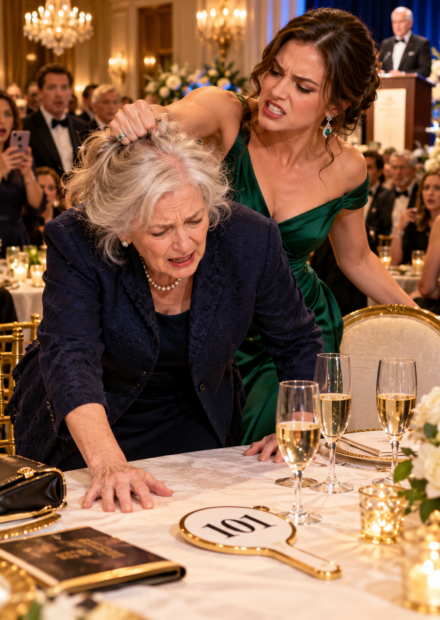
Ben stood so fast the coffee table shook.
“Ben,” I said.
He stared at his sister.
“You were going to blame my wife?”
“I didn’t.”
“You planned to.”
“I thought about it.”
“That is not better.”
“No.”
Melissa looked at me.
“I’m sorry.”
I believed she was sorry.
That did not mean I forgave her.
“I heard you crying in the laundry room after Mom called you Anna,” she continued.
My stomach turned.
“I remember thinking that if I ever needed to explain why you had started taking money, I could say you resented caring for her.”
Ben swore under his breath.
Evelyn looked sick.
Melissa’s eyes stayed on mine.
“I turned your grief into an alibi for myself.”
That sentence finally broke through my anger.
Not because it excused her.
Because she understood what she had done.
“I don’t know what to say to you,” I whispered.
“You don’t have to say anything.”
“Good.”
She nodded.
Fair.
Then Evelyn asked a question none of us expected.
“Why did you search the green box?”
Melissa almost smiled through her tears.
“You said the house papers were there.”
“I know.”
“I thought maybe there was a will.”
“And?”
“And I wanted to know.”
“If the house was yours?”
“Yes.”
Evelyn leaned back.
For a moment I saw the woman who had invented weeks of madness just to make a thief careless.
“You always were nosy.”
A stunned laugh escaped Ben.
Then me.
Then, unbelievably, Melissa.
Evelyn did not laugh.
But the corner of her mouth moved.
It was not forgiveness.
It was not reconciliation.
It was simply one breath in a room that had held too many.
Melissa left after forty minutes.
Evelyn kept the envelope.
At the door, Melissa hesitated.
“Can I call you?”
Evelyn looked at her daughter for a long time.
“Yes.”
Melissa nodded.
“Okay.”
“But do not come here without asking.”
“I won’t.”
“And you will never have a key again.”
Melissa swallowed.
“I understand.”
Evelyn closed the door.
She leaned against it.
I stood nearby.
After a moment she said, “That was harder than pretending to have dementia.”
I laughed.
She did too.
Then she cried.
I held her.
There was no clever line for that moment.
No lesson big enough.
A mother had discovered her daughter was capable of stealing from her.
A daughter had discovered resentment could become entitlement one small excuse at a time.
A son had discovered both his mother and sister could deceive him for completely different reasons.
And I had learned that sometimes the person everyone believes is disappearing may be the only one watching clearly.
The following spring, Evelyn changed her estate plan.
She told no one the details.
When Ben asked, she smiled.
“You’ll find out when I’m actually dead.”
He groaned.
“Mom.”
“What?”
“That isn’t funny.”
“It is from my side.”
She kept the house.
That mattered most.
Not because of its value.
Not because of who might inherit it one day.
Because it was hers.
She planted new roses along the fence.
The same roses she had asked Melissa about during dinner when all of us thought she was confused.
One Saturday, I helped her spread mulch.
She sat back on her heels and wiped sweat from her forehead.
“You know,” she said, “I almost told you everything that day in the laundry room.”
“I wish you had.”
“So do I.”
“You could have saved me several emotional breakdowns.”
“I know.”
“And one very uncomfortable conversation with your son.”
“I know.”
“And you owe me for making me think you forgot my name.”
She looked at me innocently.
“Did I?”
I threw a gardening glove at her.
She laughed so hard she had to sit down.
For a second, I saw Melissa’s face in my mind.
The old Melissa.
The sister who brought birthday cakes.
The daughter who drove her father to radiation.
The woman she had been before envy and fear turned into permission.
Maybe one day she would sit in that garden again.
Maybe she wouldn’t.
That choice belonged to Evelyn.
Forgiveness, I learned, does not mean returning the keys.
It does not mean pretending the door was never opened.
And love does not require giving someone another chance to steal what they once decided they deserved.
Evelyn taught me that.
She taught all of us.
Months after everything happened, I found my old notebook in a drawer.
I had forgotten about it.
I sat at the dining-room table and read the entries.
Called me Anna.
Lost purse.
Remote in refrigerator.
House remembers who opens wrong doors.
Some people count money backward.
Change a lock without changing a door.
At the time, they had sounded like the wandering thoughts of a frightened old woman.
Now I understood every one.
The house remembers who opens the wrong doors.
Melissa had entered rooms she had no right to search.
Some people count money backward.
Evelyn had been tracing missing withdrawals.
Change a lock without changing a door.
Sometimes protecting your home did not mean leaving.
It meant deciding who no longer got access.
I turned to the final page.
The last sentence I had written before everything came apart was still there.
She wants us to think she is.
I picked up a pen.
Beneath it, I wrote:
She remembered all of us.
She was waiting to see what we would do when we thought she couldn’t.
I closed the notebook.
From the kitchen, Evelyn shouted,
“Anna! Where did you put my glasses?”
I froze.
Then heard her laughing.
“Evelyn!”
Her laughter became louder.
I walked into the kitchen ready to scold her and found her glasses sitting on top of her head.
She pointed at them.
“Too much?”
“Yes.”
“Still funny.”
“No.”
“You’re smiling.”
“I’m considering a nursing home.”
She gasped theatrically.
“You wouldn’t.”
“I know a woman who has brochures.”
For one second, we stared at each other.
Then both of us lost it.
Ben walked in while we were laughing.
“What did I miss?”
“Nothing,” I said.
Evelyn adjusted her glasses.
“Your wife is trying to steal my house.”
Ben looked from her to me.
Then he sighed.
“I’m going back outside.”
He turned around.
Evelyn called after him.
“Benjamin?”
He looked back.
Her expression softened.
“I know your name.”
Ben stopped.
So did I.
The joke disappeared.
For just a heartbeat, the months behind us returned.
The fear.
The anger.
The betrayals.
All the nights he had wondered whether his mother would recognize him in the morning.
He walked back.
Bent down.
Kissed her forehead.
“I know, Mom.”
Evelyn closed her eyes.
When she opened them, they were wet.
Ben went outside.
I reached for her hand.
She squeezed mine.
Beyond the kitchen window, the roses moved gently in the spring wind.
The house was still standing.
The money could be repaid.
The locks had been changed.
Trust would take longer.
Some relationships might never return to what they had been.
Maybe they shouldn’t.
But Evelyn was still here.
Still sharp.
Still stubborn.
Still remembering.
And after everything we had almost lost because one woman believed weakness gave her permission to take, there was something beautifully defiant about that.
My mother-in-law had never forgotten who we were.
She had only pretended to.
Because she needed to know who we would become when we thought she had.